
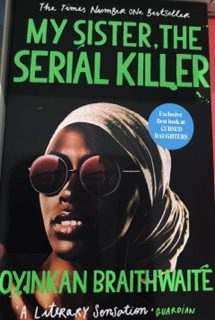
Charm, Chaos, and a Complicated Villain
ASPD in Ayoola is not just a clinical possibility; it’s the thread that runs beneath her beauty. From the opening pages of My Sister, the Serial Killer, Ayoola glides through the story like a beautiful hurricane, captivating everyone in her path while leaving destruction behind. Consequently, Oyinkan Braithwaite creates a character who feels disturbingly real despite her extreme actions. Ayoola kills men with casual ease, then asks her sister to help clean up the mess.
What makes Ayoola so unsettling isn’t just her violence. Instead, it’s her complete lack of guilt about it. She doesn’t struggle with conscience or wrestle with moral questions. She acts, then moves on as if nothing happened. Although the novel never provides a clinical diagnosis, Ayoola’s behaviour patterns align closely with Antisocial Personality Disorder (ASPD). Typically, female characters with ASPD rarely appear in literature, especially not as complex protagonists. Women with personality disorders are often portrayed as either wholly evil or tragically misunderstood. However, Ayoola resists both extremes. She’s neither sympathetic nor cartoonishly villainous. She is what she is.
Understanding ASPD in Ayoola’s offers insight into a disorder that’s frequently misrepresented in the media and misunderstood in real life. Her story shows how personality disorders can manifest in ways that society doesn’t expect, particularly in women. By examining her traits through a psychological lens, we can better understand both the character and the real condition she may represent.
I find Ayoola fascinating precisely because she defies easy categorisation. She forces us to confront uncomfortable questions about charm, manipulation, and the masks people wear.
Before going any further, why not read a short interview in The Guardian (Oyinkan Braithwaite’s serial-killer thriller: would you help your murderer sister)? Or, listen to this captivating reading of the novel in the following audiobook?
What Is Antisocial Personality Disorder?
To begin with, antisocial personality disorder affects roughly 1% of women and 3% of men (MentalHealth.com). It is prevalent in people between the ages of 24 and 44, and typically emerges during childhood or adolescence, continuing into adulthood. At first glance, people with ASPD may seem charming or charismatic on the surface. They usually excel at reading social cues and saying exactly what others want to hear. However, these skills are used for manipulation rather than a genuine connection, as they tend to lack empathy and struggle to form authentic emotional bonds with others.
ASPD is defined by a persistent pattern of disregarding and violating the rights of others. According to the Mayo Clinic, it manifests through several key behaviours: deceitfulness, impulsivity, superiority, aggression, reckless disregard for safety, consistent irresponsibility, and lack of remorse. Not everyone with ASPD becomes violent, but they typically show little concern for how their actions affect others.
Importantly, ASPD may present differently in women than in men. Female presentations often involve more emotional manipulation and less physical aggression. According to BetterHelp, women with ASPD might use relationships or sexuality as tools of control, and they usually show a marked lack of remorse and high levels of impulsivity.
ASPD in Ayoola is reflected through her casual approach to murder, her magnetic charm, and her repeated manipulation of those around her. These traits suggest a fundamental difference in how she processes relationships and moral boundaries.
How Ayoola Uses Beauty and Charisma
Ayoola’s physical attractiveness functions as her primary weapon. Men become infatuated with her instantly, while women often feel inferior in her presence. She wields her beauty with calculated precision, understanding exactly how it affects others and using that knowledge to her advantage. Notably, this superficial charm is a hallmark of ASPD. People with the disorder often possess an almost magnetic quality that draws others in. Yet, this charm is rarely sincere; it lacks genuine warmth or interest in others.
Throughout the novel, Ayoola demonstrates this manipulative charm repeatedly. She knows exactly what to say and how to act to get what she wants. Her social skills are impressive but hollow, designed to serve her needs rather than build authentic connections. Her sister Korede frequently observes how easily Ayoola enchants people. Men compete for her attention, colleagues favour her at work, and even their mother shows an apparent preference for her.
The contrast between Ayoola’s public persona and her private actions reveals the calculating nature of her charm. ASPD in Ayoola becomes most evident in this split – the polished face versus the detached core underneath. Her ability to manipulate others while evading accountability is what makes her so dangerous. The contrast between Ayoola’s public persona and her private actions reveals the calculating nature of her charm. Her ability to manipulate others while evading accountability is why she’s so dangerous. As Kodede observes of her sister, “It’s because she is beautiful, you know. That’s all it is. They don’t really care about the rest of it. She gets a pass at life.” Ultimately, most of us have encountered people with similar abilities; individuals who seem to light up rooms but leave others feeling drained or confused afterwards.
How Ayoola Views Her Victims
Perhaps most disturbingly, ASPD in Ayoola’s is reflected in her complete absence of guilt about the men she kills. She doesn’t torture herself with regret or struggle with moral conflict. Instead, she treats their deaths as minor inconveniences to be managed efficiently. As she bluntly tells Korede after one murder, “Do you think they suffer?” Ayoola’s question is more curious than remorseful.
This emotional detachment is a hallmark of antisocial personality disorder. People with ASPD may understand intellectually that their actions hurt others. Still, they don’t experience the emotional weight of that knowledge. They can discuss harmful behaviour without showing genuine distress about causing pain. ASPD in Ayoola becomes most apparent when her post-murder routine reveals her emotional detachment. She systematically erases evidence of her victims’ existence, deleting photos, disposing of belongings, and cleaning blood. These actions are practical rather than emotional responses. She’s not mourning the loss of life; she’s avoiding consequences. As she once says dismissively, “I didn’t mean to kill him. He just wouldn’t let go.”
Moreover, her casual references to the deaths further reinforce this lack of remorse. She doesn’t euphemise or dramatise what she’s done; she acknowledges the facts and moves on. This matter-of-fact approach to violence reveals an ASPD in Ayoola tendency to view others as objects rather than complete human beings.
Finally, the novel shows how this mindset affects her relationships with living people, even with her sister Korede. Though she relies on Korede functionally, their relationship lacks genuine emotional depth. Ayoola’s ability to compartmentalise extreme actions without guilt, reflection or emotional consequences suggests a fundamental difference in how she processes morality and consequence. Where such acts might haunt others, she remains calm, detached, and disturbingly focused on her own immediate needs and desires.
Ayoola’s Power Over Korede
The relationship between Ayoola and her older sister Korede illustrates how individuals with antisocial personality disorder can manipulate those closest to them. Rather than using threats or physical force, Ayoola leans on emotional manipulation. Instead, she exploits their family bond and Korede’s sense of responsibility, instinctively understanding what motivates her sister. She knows Korede feels protective of her and will prioritise family loyalty over other considerations. This knowledge allows her to manipulate situations without appearing overtly controlling or demanding.
ASPD in Ayoola becomes especially clear in the subtle ways she tries to control this relationship. Ayoola never appears to be overtly demanding. Instead, she presents her murders as unfortunate incidents and as situations that happened to her rather than actions she chose. After one killing, she says, “He wasn’t right for me, so I had to do something about it.” This passive language blurs the line between victim and perpetrator, making it harder for Korede to refuse assistance or question the pattern of violence.
People with ASPD often excel at identifying others’ vulnerabilities and using them to serve their needs. They can maintain relationships that serve their purposes while feeling little genuine attachment to the other person. Likewise, Ayoola’s treatment of Korede demonstrates this dynamic. She expects Korede to handle the consequences. She doesn’t consider how her actions affect her sister’s mental health or moral well-being. Her focus remains entirely on her own immediate needs.
This pattern reflects a broader ASPD trait: using relationships as tools rather than experiencing them as mutual connections. Ayoola maintains her bond with Korede because it benefits her, not because she genuinely cares about her sister’s welfare or happiness.
Why Ayoola’s Portrayal Breaks New Ground
In most media portrayals, antisocial personality disorder is typically portrayed through male characters, for example, Hannibal Lecter or Patrick Bateman. These figures often emphasise physical violence, sadism, and dramatic disregard for social norms. However, ASPD in Ayoola challenges these stereotypes by presenting ASPD in a young, attractive woman operating within family and social networks.
BetterHelp indicates that ASPD manifests differently across genders. Women with the disorder may rely more heavily on emotional manipulation, sexual or romantic exploitation, and social engineering rather than direct aggression. Ayoola’s methods align with these gendered patterns of antisocial behaviour. She doesn’t stalk her victims; instead, they fall willingly into her orbit. As Korede puts it, “The men in her life were just temporary fixtures… none of them stayed long.”
The book’s perspective through Korede’s eyes also provides insight into how families cope with potentially dangerous members. Many people with ASPD maintain relationships with family members who struggle with conflicting loyalties and moral obligations. Korede’s position reflects real dilemmas faced by those who love someone with the disorder. Her internal struggle is evident when she says, “I know she’s beautiful. I know that she’s lovable. But she’s dangerous.”
Female characters with personality disorders are often either demonised or romanticised in fiction. Moreover, Ayoola avoids both extremes. She’s neither a tragic victim of circumstance nor a glamorous antihero. Instead, she’s simply a person whose brain works differently, with devastating consequences for others. This representation of ASPD in Ayoola matters because it reflects a reality rarely acknowledged in popular culture. Ultimately, women can have ASPD, and their behaviour can be just as harmful as their male counterparts, even when it manifests through different methods.
Understanding ASPD Through Fiction
Ultimately, Ayoola’s character offers valuable insights into ASPD in Ayoola while avoiding sensationalism or stigmatisation. Her portrayal shows how the condition can manifest in unexpected ways and affect seemingly ordinary families and communities. By looking closely, we begin to understand that her charm, manipulation, and lack of remorse aren’t just fictional quirks; they reflect documented patterns of ASPD presentation, particularly in women. Moreover, the novel succeeds in creating a complex character who defies easy moral categorisation. Ayoola isn’t evil in a cartoonish sense, nor is she sympathetic in traditional ways. She operates according to different rules than most people, with consequences that ripple through her relationships and community.
Crucially, understanding ASPD doesn’t mean excusing harmful behaviour. Still, it does provide context for recognising and responding to it more effectively. Fiction like My Sister, the Serial Killer can help readers develop more nuanced perspectives on personality disorders and mental health. Ayoola’s story reminds us that dangerous people don’t always look threatening. They might be charming, beautiful, and socially adept. They might be family members we love despite recognising their harmful patterns. These uncomfortable truths make her character both compelling and deeply unsettling.
Perhaps most significantly, the novel invites us to consider how we respond when people we care about display concerning behaviour patterns. Korede’s inner conflict reflects real-life struggles faced by many families dealing with personality disorders – how to maintain love while protecting ourselves and others from harm. As Korede admits, “I can’t save her. She doesn’t want to be saved.” This line struck me – how many of us have felt that helpless tug between wanting to save someone and knowing we can’t? Have you ever found yourself in Korede’s position, loving someone who repeatedly crosses moral lines?
Struggling with Antisocial Personality Disorder?
If you’re experiencing symptoms of impulsivity, recklessness, irresponsibility, lack of remorse or a disregard for safety, know that you’re not alone. Unlike Ayoola, we have the advantage of living in a time when support for mental health is more widely available. Whether it’s through therapy, support groups, or online communities, there are many ways to seek help.
If you’re looking for guidance on antisocial personality disorder, you can start with this NHS link or explore this informative factsheet about different disorders by Mind. You might also find comfort in watching the following YouTube video where Dyshae, in his interview, shares his experiences of living with antisocial personality disorder and being bipolar.
Did you enjoy reading about ASPD in Ayoola? If so, I’ve written a companion piece in which the protagonist, Rachel Watson, offers a powerful lens on misunderstood female protagonists and the hidden signs of neurodivergence. For further reading, see my blog on ADHD in Rachel Watson: A Disorder Misunderstood.
I’d really love to know what you thought about ASPD in Ayoola. Did her story strike a chord with you? Were there any moments that lingered in your mind after finishing the book? Feel free to share your thoughts in the comments! Stories like Ayoola’s are a big part of why I love discussing books with you – they remind us we’re not alone in how we feel. ❤️
Connect to Other Novels About Antisocial Personality Disorder
After reading about ASPD in Ayoola, why not consider reading more literature that explores ASPD? Why are these novels important? These three novels offer vital insight into antisocial personality disorder (ASPD) by centring on manipulative, emotionally detached female protagonists. Gone Girl by Gillian Flynn exposes the terrifying intelligence of Amy Dunne, who uses charm and lies as weapons. Similarly, Verity by Colleen Hoover presents a character who hides a chilling lack of empathy beneath literary success and maternal identity. Meanwhile, in How to Kill Your Family, Bella Mackie delivers a protagonist who rationalises murder with biting wit and disturbing clarity. Although each character operates differently, they all show classic ASPD traits: deceit, emotional detachment, and a lack of remorse. These books shift the narrative away from male-centric portrayals of ASPD and instead examine how the disorder manifests in women.
Verity by Colleen Hoover
 Verity introduces readers to a chilling portrayal of antisocial personality disorder (ASPD) through the character of Verity Crawford. At first, Verity appears to be a successful author and grieving mother. However, as the story unfolds, her disturbing traits begin to surface. She manipulates those around her with ease, especially her husband, Jeremy, and the unsuspecting protagonist, Lowen. Through her “autobiographical manuscript“, Verity reveals a pattern of calculated cruelty and a complete lack of remorse. Moreover, she uses charm to disarm suspicion and maintains a convincing public persona. This duality aligns closely with how ASPD can manifest, especially in women, through deceit, emotional manipulation, and social mimicry rather than overt violence. The novel blurs the line between truth and fiction, which adds psychological depth to Verity’s character and keeps readers questioning her intent.
As the plot twists unfold, it becomes clear that Verity’s behaviour mirrors real-life ASPD traits: deceitfulness, callousness, and an absence of empathy. Ultimately, the novel highlights how individuals with ASPD can hide in plain sight, especially when their charm overshadows their cruelty. Verity is both fascinating and deeply unsettling, a reminder that danger doesn’t always look dangerous.
How to Kill Your Family by Bella Mackie
 How to Kill Your Family introduces readers to Grace Bernard, a witty, stylish young woman with a deadly secret and a chilling emotional detachment. Grace embarks on a mission to murder the family who abandoned her mother. She plans each killing with careful precision, showing no remorse for her actions. Her charm and intelligence mask a cold, calculated personality that aligns closely with antisocial personality disorder (ASPD).
Grace doesn’t kill impulsively. She studies her victims, manipulates situations, and executes her plans without guilt. At the same time, she blends into society with ease, holding down jobs and maintaining her outward poise. She uses sarcasm and wit to distance herself from emotional accountability. Moreover, Grace views her murders as justified revenge, not moral transgressions. This sense of entitlement, combined with her emotional numbness, reflects key traits of ASPD. She shows no empathy, no internal conflict, only a fierce focus on control.
How to Kill Your Family offers a sharp, darkly comic twist on the female with antisocial personality disorder. Grace forces readers to question how far charm and rationalisation can disguise deeply harmful behaviour. Her story shows that ASPD in women doesn’t need gore; it thrives in calm calculation.
Gone Girl by Gillian Flynn
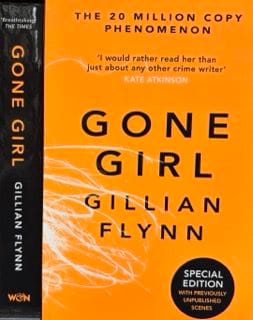 In Gone Girl, Amy Dunne embodies many traits associated with ASPD, making her one of fiction’s most compelling and terrifying antiheroines. At the start, she appears to be the victim of a domestic tragedy. However, the narrative quickly flips, revealing Amy as a master manipulator.
Amy plans her disappearance to punish her husband, Nick, for perceived betrayals. She lies, forges evidence, and stages scenes to frame him for murder. Her actions show no empathy or guilt. Instead, she feels justified. She believes Nick deserves her cruelty, which reflects a core ASPD trait: a lack of remorse.
Furthermore, Amy excels at charming others and controlling narratives. She controls media perception, manipulates the justice system, and even turns public sympathy into a weapon. Her intelligence and calm detachment only deepen her menace. Though Amy occasionally plays the victim, she remains emotionally detached from the harm she causes. Gone Girl challenges stereotypes by showing how ASPD can manifest in women. Amy doesn’t need violence; her mind is her most potent weapon. The novel reveals how dangerous a charming, intelligent, and remorseless person can be, especially when society believes she’s the one in danger.
Continue Your Journey: Personal Development and Antisocial Personalty Disorder
You’re not alone in this. These reads may help you explore, reflect, or take the next small step.
Looking to Enhance Your Reading Experience: Thoughtfully Chosen Accessories for Deep, Emotional Reads
Because reading about complex lives should come with simple comforts, discover accessories that support your experience.
- icon Dalton Cord Recliner Bean Bag, Beige, Large Adult Bean Bag Chair with Filling Included, Comfy Chair, Living Room Furniture, Bedroom Furniture
- Glocusent LED Neck Reading Light, Book Light for Reading in Bed, 3 Colors, 6 Brightness Levels, Bendable Arms, Rechargeable, Long Lasting, Perfect for Reading, Knitting, Camping, Repairing
- Vixar Reading is Always a Good Idea Book Reader Gift Presents Coloured Ceramic Mug Cup Gift 330ml 11oz Work Office Tea Coffee (G Yellow)
These are items I highly recommend. If you purchase after clicking on one of my affiliate links, I will earn a bit of coffee ☕️ money, which I promise to enjoy while reading and researching for my next blog, continuing to support you on your journey. You do not pay a higher price! 😊
Subscribe to My Newsletter
Welcome, and join me and a community of fellow book lovers!
As a thank you, when you sign up, I’ll also send you my personal reading list: a selection of books, poems, plays and short stories that explore mental illness in all aspects of life.