
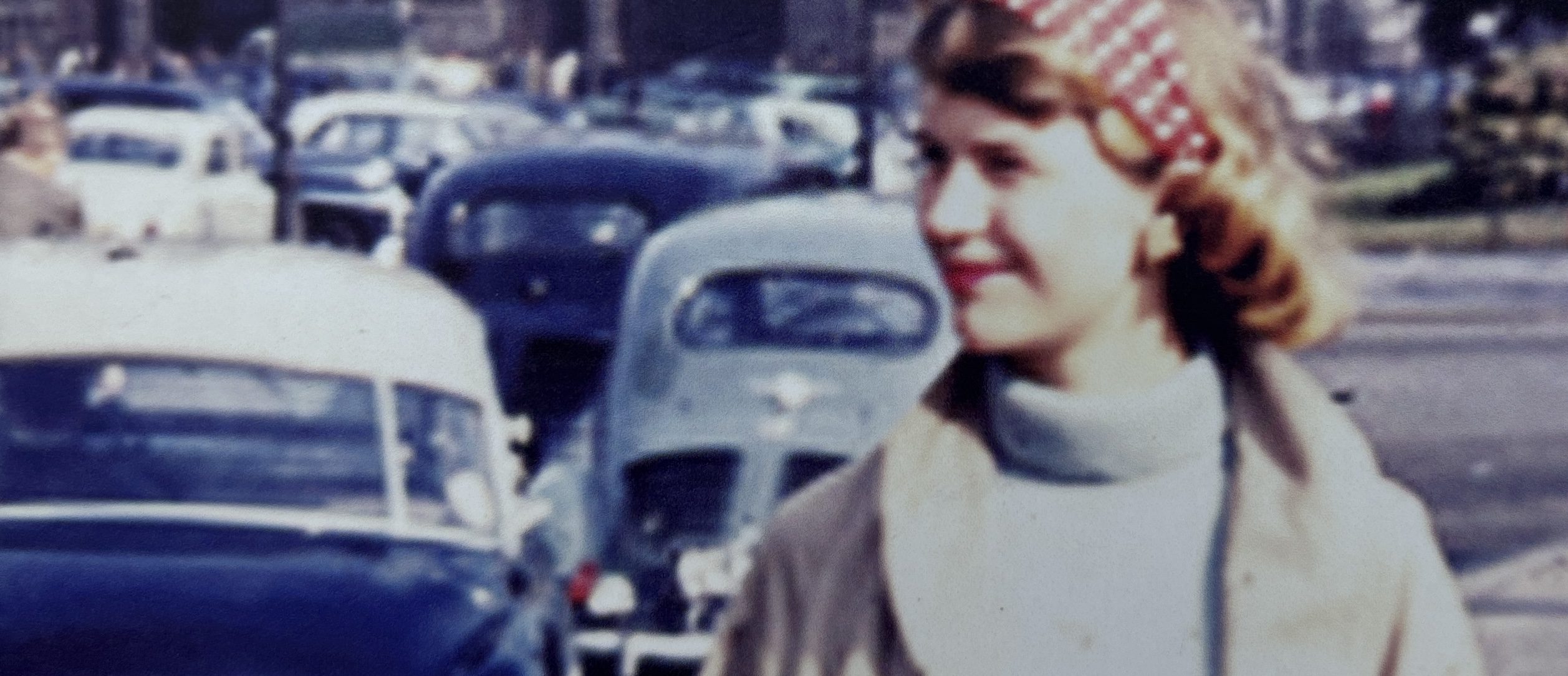
Dissociation in Sylvia Plath’s poem “Mad Girl’s Love Song” is captured in the refrain: “I shut my eyes and all the world drops dead.” These haunting words open Sylvia Plath’s “Mad Girl’s Love Song“, a poem that captures the disorienting experience of mental distress, immediately pulling readers into a world where reality becomes fragile and uncertain. Plath’s villanelle explores dissociation, a psychological state where individuals feel disconnected from themselves or their surroundings. This mental process often serves as a protective mechanism during overwhelming stress or trauma, which also creates profound confusion about what is real and what is imagined.
Through her “mad girl“ persona, Plath gives voice to experiences that many find difficult to articulate. The poem doesn’t simply describe mental distress from the outside. Instead, it places readers inside the fractured consciousness of someone questioning their own perceptions of reality. Furthermore, the poem’s exploration of love and loss adds another layer of complexity to its narrative. The speaker’s relationship with an absent lover becomes entangled with her relationship to reality itself. This connection reveals how emotional trauma can trigger dissociative episodes.
When I first encountered this poem, the power of the refrain struck me immediately. The speaker claims an almost godlike ability to erase existence with a simple gesture of closing her eyes. Yet this power feels more like a curse than a gift. The repetition of these words throughout the poem creates an obsessive quality that mirrors the cyclical nature of troubled thoughts.
Before continuing, why not listen to Tom O’Bedlam reading her poem “Mad Girl’s Love Song“ or explore more about why you should read Sylvia Plath in this TED-Ed video?
Understanding Dissociation
To truly understand dissociation in Sylvia Plath’s poem, we must grasp the meaning of dissociation in psychological terms. Dissociation happens when the mind distances itself from a person’s thoughts, feelings, or surroundings. This mental process can feel like observing your life from outside your body. Most people experience mild dissociation regularly, such as zoning out during a dull lecture or feeling detached while driving a familiar route. These moments are normal responses to boredom or stress. However, severe dissociation results in more troubling symptoms that can significantly affect daily life, like perceiving the world as foggy or dreamlike, or experiencing distorted time. Dissociation often occurs alongside various mental health conditions. Depression, anxiety disorders, and post-traumatic stress disorder frequently include dissociative symptoms. The condition exists on a spectrum, from brief episodes to chronic, severe forms that disrupt daily functioning.
Dissociation in Sylvia Plath’s “Mad Girl’s Love Song” is captured with remarkable accuracy. The poem’s speaker embodies the confusion and disconnection that define dissociative experiences. Through her words, readers gain insight into how this mental process feels from within.
The Poem’s Structure as Dissociation
Plath chose the villanelle form for “Mad Girl’s Love Song,” and this decision proves crucial to the poem’s impact. The form’s repetitive nature mirrors the obsessive quality of dissociative thoughts. Just as the mind can become trapped in loops during psychological distress, the villanelle traps readers in its cyclical structure. The refrains “I shut my eyes and all the world drops dead” and “I think I made you up inside my head” return again and again, like intrusive thoughts that refuse to disappear. This repetition creates a sense of being unable to move forward or find resolution. I’ve noticed how each repetition feels both familiar and slightly different. The context changes even as the words remain the same, moving from a private declaration in the opening refrain to a confessed love and loss in a later refrain. This shifting quality reflects how dissociative experiences can feel both repetitive and disorienting.
Moreover, the villanelle’s rigid constraints create an interesting tension. The speaker claims power over reality, yet she remains trapped within the poem’s predetermined structure. This paradox echoes the dissociative experience itself. People may feel they control their detachment from reality, but they often find themselves powerless to reconnect. The poem’s circular structure also prevents any sense of progression or healing. Unlike traditional narratives that move toward resolution, the villanelle ends where it began. The final quatrain brings both refrains together, intensifying rather than resolving the speaker’s crisis. This structural choice perfectly captures the trapped feeling that characterises severe dissociation.
Key Images of Disconnection
Beyond its structure, “Mad Girl’s Love Song” employs powerful imagery to convey the dissociative experience. The opening line, “I shut my eyes and all the world drops dead,” immediately establishes the speaker’s relationship with reality. This image suggests both ultimate power and profound isolation. The act of shutting one’s eyes usually blocks out visual stimuli temporarily. However, Plath’s speaker claims this simple gesture erases existence itself. This exaggeration reflects how dissociation can make the external world feel unreal or nonexistent. During severe episodes, people often report that their surroundings seem to disappear or become meaningless.
Conversely, the speaker also describes opening her eyes to resurrect the world: “I lift my lids and all is born again.” This alternating pattern of destruction and creation places enormous responsibility on the individual. The imagery suggests that reality depends entirely on the speaker’s mental state, a burden that many people with dissociative disorders recognise.
The poem’s title introduces another crucial image: the “mad girl” persona. This phrase carries complex meanings about sanity, gender, and social expectations. The speaker embraces madness as part of her identity, yet she also questions her own perceptions of it. This duality captures the confusion that accompanies dissociative states. Throughout the poem, the absent lover becomes a central figure of uncertainty. The speaker wonders, “I think I made you up inside my head.” This blurring of memory and imagination represents a key feature of dissociative experiences.
The Crisis of Reality
Dissociation in Sylvia Plath’s “Mad Girl’s Love Song” achieves something remarkable: it transforms the isolating experience of dissociation into shared understanding. Through her masterful use of the villanelle form, Plath creates a literary mirror of psychological fragmentation. The poem’s repetitive structure, powerful imagery, and central crisis of reality work together to illuminate the inner workings of a dissociative mind. The poem’s contribution to mental health understanding cannot be overstated. When I consider how effectively Plath captures the confusion and fear of dissociation, I recognise the vital role that artistic expression plays in fostering empathy and awareness.
Moreover, the poem’s enduring relevance speaks to the universality of mental health struggles. Written decades ago, dissociation in Sylvia Plath’s “Mad Girl’s Love Song” continues to resonate with contemporary readers who recognise their own experiences in its lines. Through the speaker’s crisis, we confront the fragility of our own mental constructions. The boundary between sanity and madness, between real and imagined, proves less stable than we might prefer to believe.
As mental health awareness continues to grow, works like “Mad Girl’s Love Song” serve as essential cultural touchstones. They remind us that behind every diagnosis lies a human being struggling to make sense of their experience. Literature provides a bridge between the clinical and the personal, the pathological and the profoundly human. Perhaps that’s why this poem still resonates; it invites us into a space of confusion that many quietly recognise.
Perhaps you, too, have felt that uncertainty, wondering if something was real or only imagined. Plath reminds us that such experiences, while isolating, are more universal than we think. For me, this poem reminds us that literature doesn’t just describe mental illness; it lets us feel it, and that’s where empathy begins.
Struggling With Dissociation?
If you’re struggling with feelings of dissociation, remember you’re not alone. There are many ways to reach out for support. The NHS offers resources to learn more about dissociative disorders. At the same time, Mind and Healthline share practical self-care techniques that may help during moments of dissociation. Mind also provides valuable contacts if you’re looking for additional support with dissociation and dissociative disorders.
Did you enjoy exploring dissociation in Sylvia Plath’s “Mad Girl’s Love Song”? If so, you might also like my companion piece on another of Sylvia Plath’s poems: Depression in Lady Lazarus: A Raw Portrait of Female Suffering.
I’d love to hear your thoughts on dissociation in Sylvia Plath’s “Mad Girl’s Love Song”. Did the theme of dissociation resonate with you? Were there particular lines or images that stayed with you after reading? Share your reflections in the comments below – and if you have other poems that remind us that we’re not alone in what we’re going through, I’d love to read those too! ❤️
Connect to Other Poems About Dissociation
After reading about dissociation in Sylvia’s Plath’s poem, why not consider reading more literature that explores dissociation? Why are these poems important? These three poems reveal how dissociation shapes thought, emotion, and identity. Zachary Phillips’s “How Do I Explain This Feeling?”, directly confronts the confusion of disconnection. His words capture the struggle to name an experience that resists explanation. T.S. Eliot’s “The Hollow Men” explores emptiness and fragmentation, presenting figures who drift aimlessly without purpose or unity. The imagery reflects a sense of life lived at a distance. Elizabeth Bishop’s “One Art” explores loss through controlled detachment, illustrating how repetition can both foster resilience and induce numbness. Together, these works highlight different facets of dissociation: confusion, emptiness, and emotional distance. They encourage readers to consider how disconnection functions as both a defence and a burden.
“How Do I Explain This Feeling?” by Zachary Phillips
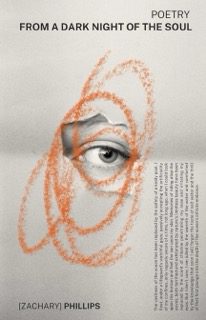 Zachary Phillips addresses the fundamental challenge of articulating dissociative experiences in his poem “How Do I Explain This Feeling?” The title itself poses the central problem: how can someone communicate such an internal, subjective state to others who haven’t experienced it?
To illustrate this, the poem begins with a question that many people with dissociative disorders recognise. The speaker acknowledges the difficulty of describing feelings that seem to resist language. This struggle reflects the isolating nature of dissociation, where sufferers often feel unable to convey their experiences to loved ones or healthcare providers. Moreover, Phillips emphasises the involuntary nature of dissociative episodes. The feeling “comes unwilling”, highlighting how people cannot control when dissociation occurs. This lack of agency creates additional distress for those experiencing these states.
“The Hollow Men” by T.S. Eliot
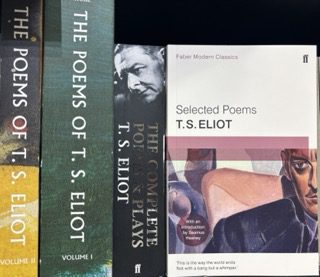 T.S. Eliot’s “The Hollow Men” explores spiritual and emotional dissociation in the aftermath of World War I. The poem presents speakers who feel fundamentally empty and disconnected from meaning, purpose, and authentic emotion. While not explicitly addressing clinical dissociation, the work captures the broader human experience of psychological disconnection.
In particular, the famous opening lines describe the speakers as “hollow men” and “stuffed men”, suggesting beings who lack genuine substance or inner life. This imagery reflects the numbness that often accompanies dissociative states. The speakers exist but don’t feel truly alive or present in their own experiences. Throughout the poem, Eliot uses fragmented language and broken syntax to mirror psychological fragmentation. The speakers struggle to establish meaningful connections with others. This breakdown in language parallels how dissociation can disrupt normal cognitive processes and social connections. The poem’s conclusion, with its famous “whimper” rather than “bang”, emphasises the quiet desperation of dissociated existence. The speakers fade away rather than dramatically exploding, suggesting the gradual erosion of connection that defines their condition.
“One Art” by Elizabeth Bishop
 Elizabeth Bishop’s “One Art” employs the villanelle form to explore emotional dissociation as a means of survival. The poem presents loss as an art form that can be mastered through practice and emotional detachment. This approach reflects how people often dissociate from painful experiences to cope with overwhelming grief.
The repeated refrain “The art of losing isn’t hard to master” functions as a mantra of emotional disconnection. The speaker attempts to convince herself that loss can be managed through psychological distance. This repetition mirrors how dissociation can become a habitual response to emotional pain. Moreover, Bishop structures the poem as a progression from small losses to devastating ones. The speaker begins with lost keys and time, then moves to places, names, and finally a beloved person. However, she maintains the same detached tone throughout, demonstrating how dissociation can numb even the most significant losses.
Furthermore, the poem’s formal constraints mirror the emotional restraint the speaker imposes on herself. The villanelle’s rigid structure reflects her attempt to control grief through disconnection. Yet the final stanza reveals cracks in this façade, suggesting that complete dissociation from profound loss remains impossible.
Dissociation personal development
You’re not alone in this. These reads may help you explore, reflect, or take the next small step.
Looking to Enhance Your Reading Experience: Thoughtfully Chosen Accessories for Deep, Emotional Reads
Because reading about complex lives should come with simple comforts, discover accessories that support your experience.
- icon Dalton Cord Recliner Bean Bag, Beige, Large Adult Bean Bag Chair with Filling Included, Comfy Chair, Living Room Furniture, Bedroom Furniture
- Glocusent LED Neck Reading Light, Book Light for Reading in Bed, 3 Colors, 6 Brightness Levels, Bendable Arms, Rechargeable, Long Lasting, Perfect for Reading, Knitting, Camping, Repairing
- Vixar Reading is Always a Good Idea Book Reader Gift Presents Coloured Ceramic Mug Cup Gift 330ml 11oz Work Office Tea Coffee (G Yellow)
These are items I highly recommend. If you purchase after clicking on one of my affiliate links, I will earn a bit of coffee ☕️ money, which I promise to enjoy while reading and researching for my next blog, continuing to support you on your journey. You do not pay a higher price! 😊
Subscribe To My Newsletter
Welcome, and join me and a community of fellow book lovers!
As a thank you, when you sign up, I’ll also send you my personal reading list: a selection of books, poems, plays and short stories that explore mental illness in all aspects of life.