

Silence as Survival
Estha’s selective mutism is more than mere silence; it reflects deep emotional trauma and a retreat from a painful reality. Have you ever found yourself speechless – not because you had nothing to say, but because something inside you couldn’t speak? That’s how Estha exists in The God of Small Things.
When we first meet Estha in The God of Small Things, he is silent. He has stopped speaking altogether, years after the childhood events that shattered his world. His mutism, while subtle, carries immense emotional weight. Estha’s silence is not simply a quirk of character. It is a complex response to deep, unresolved trauma.
Selective mutism is a rare anxiety disorder, often triggered by intense psychological distress. It is not the same as choosing to remain quiet. Instead, the person feels unable to speak in specific situations, even when they want to. In Estha’s case, this silence becomes permanent. His mutism is more than a symptom – it is his way of surviving. As I read Estha’s story, I found myself drawn to his quiet presence. Arundhati Roy gives his character space to exist without words, and in doing so, she challenges the idea that speaking is the only form of expression. Estha’s selective mutism shows how silence can become a language of its own.
In this blog post, I will explore Estha’s silence as both a psychological condition and a form of emotional survival. By looking at what causes his mutism, how it shapes his relationships, and what it reveals about trauma, we can better understand the quiet power behind his character. Through Estha, Roy offers us a haunting portrait of how children carry pain into adulthood – and how silence sometimes speaks the loudest.
Before going any further, why not read a short review in The Guardian? Or, why not watch the following video by TedED? In it, Laura Wright gives a lesson on why we should read The God of Small Things.
What is Selective Mutism?
According to the NHS, selective mutism is a complex anxiety disorder that typically begins in childhood. A person with this condition can speak but becomes unable to do so in certain settings or with specific people. The inability to talk is not due to physical limitations or defiance, but rather extreme anxiety that overwhelms the individual’s ability to respond verbally. Children with selective mutism often speak comfortably at home but remain silent at school or in public. Their silence is not a choice in the usual sense; it is a protective mechanism. The body shuts down speech as a means of coping with a perceived threat. This silence, then, becomes a form of psychological armour. The following video by Child Mind Institute explains clearly what selective mutism is, its symptoms, diagnosis and treatment.
In Estha’s case, his mutism emerges not in childhood but as a lasting response to trauma. After years of fear, guilt, and loss, Estha stops speaking altogether. His silence isn’t situational; it becomes his new way of existing. Although the novel doesn’t label his condition, Estha’s behaviour aligns closely with what we understand as selective mutism.
As I researched this disorder further, I began to see Estha’s silence in a different light. It’s not a blank space or a withdrawal. It’s a sign of deep psychological injury, one that words might only deepen. Roy gives us a character who responds to trauma in a way that is often misunderstood – by disappearing into silence. By placing Estha’s mutism in the context of mental health, we can appreciate its depth. His silence is not emptiness. It is full of meaning, memory, and emotion. Understanding the condition behind it helps us see his character not as passive, but as one that survives in the only way he can.
The Roots of Estha’s Silence
Estha’s selective mutism did not appear without cause. His silence has deep roots in the trauma he experienced as a child. As the novel moves between past and present, we learn about the moments that slowly closed Estha off from the world. Each event adds another layer to his silence. One of the earliest and most disturbing traumas is the sexual abuse Estha suffers at the hands of the Orangedrink Lemondrink man. The scene is brief but haunting. Estha’s discomfort, confusion, and fear are portrayed in quiet, yet vivid detail. Afterwards, no adult in his life provides safety or support. His pain goes unnoticed. That silence from others may have been the first Estha learned to imitate.
Shortly after, he watches Velutha – the man he and his sister loved – beaten nearly to death. Estha is pressured into giving false testimony, which leads to Velutha’s arrest and eventual death. The guilt Estha carries from this moment seems to hollow him out. As he returns to Ayemenem years later, we see the result: “He had always been a quiet child. But Estha’s silence now was darker, more deliberate”. I found this part of the novel difficult to read. Roy does not exaggerate or sensationalise Estha’s trauma. Instead, she lets it unfold slowly, showing how it accumulates. Estha doesn’t experience a single breakdown. His silence builds over time, like a wall between him and the world.
These traumatic experiences are not isolated. They overlap and compound each other. Estha’s selective mutism, then, becomes a logical outcome. It is the body’s final defence when words have only brought danger. Understanding his trauma allows us to read his silence not as weakness but as an act of endurance.
Mutism as a Form of Control
Estha’s silence does more than reflect his trauma; it becomes his only form of resistance. Adults fail him, and his voice causes harm, so he reclaims control by choosing silence. In this light, selective mutism does not merely appear as a symptom; it becomes a quiet yet deliberate response. When adults coerce Estha into giving false testimony, they use his words against someone he loves. Their manipulation, not his betrayal, causes the damage. After this moment, Estha refuses to be used again. As a child, he may have lacked power, but as an adult, he chooses silence on his terms.
Roy writes, “He walked like he used to walk in the school corridors – safe in his own perimeter of silence”. This line shows how silence shelters him. Estha doesn’t hide in fear – he draws boundaries. In choosing mutism, he creates a space where no one can violate him again. As I read this, I found power in Estha’s silence. In a novel where speech often inflicts damage through gossip, betrayal, or commands, his refusal to speak resists that cycle. No one can misquote him. No one can punish him for saying the wrong thing.
This perspective challenges how we often view mutism. Many misunderstand it as passivity, but Estha’s silence reveals quiet determination. By choosing not to speak, he builds the only safety he has left. His mutism stands as both an act of survival and a protest against a world that demanded too much of him.
Twin Trauma and Unspoken Bonds
Estha’s silence is powerful in its own right, but it gains further meaning through his bond with Rahel. As twins, Estha and Rahel share a connection that transcends words. Their childhood is shaped by the same traumas: parental neglect, caste-based violence, and Velutha’s death. Though they cope in different ways, they remain deeply connected.
When Rahel returns to Ayemenem after years apart, Estha still does not speak. Yet their reunion is not cold or distant. Instead, Roy shows how they communicate without words. “It didn’t matter that Estha had not spoken to Rahel. That they had been separated for years”. In these moments, silence becomes a shared language. Rahel does not push him to speak. She listens to what is not said.
As I read these scenes, I felt struck by the gentleness of their relationship. Estha’s mutism doesn’t weaken their bond; it deepens it. Rahel responds to his silence with quiet presence, not pressure. This mutual understanding is rare, and it offers Estha something he has lost elsewhere: unconditional acceptance. Their final scene together, lying side by side, touching without words, is one of the novel’s most intimate moments. Roy doesn’t offer a conventional resolution. There is no sudden recovery or revelation. But there is a connection. And in a novel filled with loss, that connection feels quietly redemptive. Estha’s selective mutism might isolate him from the world, but not from Rahel. Their twin bond reminds us that language is just one way of connecting with someone. Sometimes, presence speaks more clearly than words ever could.
Estha as a Male Survivor
Estha’s silence assumes new significance when viewed through the lens of masculinity. In many cultures, including postcolonial Indian society, men are expected to be stoic, rational, and emotionally contained. Vulnerability, especially emotional or psychological pain, is often seen as weakness. Estha, as a male character, disrupts that expectation.
After trauma, Estha does not become angry or violent. Instead, he becomes quiet and inward. This reaction challenges cultural ideas about how men should express pain. His selective mutism is a deeply internal form of survival. Yet, because it doesn’t fit traditional male roles, it might be misunderstood or even dismissed.
Roy never mocks Estha’s vulnerability. She does not portray him as weak for being silent. Instead, she treats his quietness with respect. She allows him to feel fully, without forcing him to explain himself or perform strength. Through this approach, Roy creates a rare example of a male character who suffers silently yet retains his dignity. Estha gives voice, ironically, through silence, to those whose pain is often ignored. His mutism becomes a reminder that not all survivors express pain in visible or expected ways.
By presenting a male character who retreats rather than lashes out, Roy critiques gender norms. Estha does not fit the mould of masculine resilience, but that does not make him less intense. His survival, though quiet, is just as valid. And in a society that often overlooks men’s emotional needs, Estha’s story becomes all the more critical.
Giving Voice to the Voiceless
Arundhati Roy’s narrative style plays a crucial role in shaping Estha’s story. Although Estha himself remains silent, the novel never lets his character fade into the background. Instead, Roy uses a fragmented, nonlinear narrative to echo the fractured nature of trauma and memory.
The story moves back and forth between past and present, revealing pieces of Estha’s life like scattered shards of glass. This technique allows readers to experience his trauma indirectly, through memories, sensory details, and the perspectives of other characters. In this way, Roy gives Estha a kind of voice, even though he does not speak.
The poetic language and vivid imagery often capture what words cannot express. For example, moments of silence become charged with meaning, conveying pain and loss that defy simple explanation. This approach respects Estha’s mutism by filling his silence with feeling, rather than trying to force verbal expression. I found this narrative method profoundly compelling. It challenges the usual storytelling conventions where a character’s thoughts or dialogue are the primary means of understanding. Instead, Roy invites us to listen differently: to the silences, pauses, and fragments that reveal Estha’s inner world. Through this style, The God of Small Things becomes more than a story about trauma; it becomes an exploration of how language and silence interact. Roy’s technique honours those who cannot, or will not, speak, showing that their stories still matter.
Estha’s silence echoes throughout the novel, made visible by Roy’s unique storytelling. This narrative choice deepens our empathy for him and highlights the limits and possibilities of language.
Conclusion
Estha’s selective mutism in The God of Small Things is far more than silence. It is a complex, deeply personal way of surviving trauma that words cannot fully express. Throughout the novel, Estha’s silence stands as both a response to pain and a quiet form of resistance. He chooses not to speak in a world where speaking often leads to harm. By exploring Estha’s mutism, we see how trauma shapes the way people communicate – or stop communicating altogether. His silence is not emptiness but full of meaning, memory, and feeling. It reveals the limits of language when confronted with suffering too great to be put into words.
As a male character, Estha also challenges traditional notions of masculinity and emotional expression. His quiet strength reminds us that survival takes many forms. Sometimes, the bravest thing a person can do is to hold on in silence. Roy’s narrative style amplifies this message. Through fractured storytelling and poetic language, she gives voice to Estha’s silent experience. She honours those who cannot speak by making their silence visible and audible in a different way.
As I reflect on the story of Estha’s selective mutism, I am reminded that many of us carry unspoken pain. We may not all have selective mutism, but we understand the need for silence as a form of protection. Estha’s journey encourages us to listen more carefully: to the quiet, to the unsaid, and to the survivors who speak in ways beyond words. Ultimately, Estha’s silence is not a sign of weakness. It is a powerful testament to resilience, survival, and the human spirit’s capacity to endure.
Struggling with Selective Mutism?
If you’re feeling anxious during conversations or finding yourself withdrawing socially, know that you’re not alone. Unlike Estha, we have the advantage of living in a time where support for mental health is more widely available. Whether it’s through therapy, support groups, or online communities, there are many ways to seek help.
If you’re looking for guidance on selective mutism, you can start with this NHS link or explore this informative factsheet from the Selective Mutism Association. You might also find comfort in reading real-life experiences shared on the website SMiRA.
Did you enjoy reading about Estha’s selective mutism? If so, I’ve written a companion piece in which the protagonist, Mariam, whose journey through trauma and endurance lies at the heart of the story, embodies quiet courage. For further reading, see my blog on Mariam’s Trauma in A Thousand Splendid Suns.
I’d really love to know what you thought about Estha’s selective mutism. Did his story strike a chord with you? Were there any moments that lingered in your mind after finishing the book? Feel free to share your thoughts in the comments! Stories like Estha’s are a big part of why I love discussing books with you – they remind us we’re not alone in how we feel. ❤️
Connect to Other Novels About Selective Mutism
After reading about Estha’s selective mutism, why not explore more novels featuring this theme. Why are these novels important? The Curious Incident of the Dog in the Night-Time explores communication through Christopher, a neurodivergent teen who often withdraws from verbal expression. Though not formally diagnosed, his silence in stressful moments reflects fundamental coping strategies linked to anxiety and overwhelm. Similarly, The Weight of Silence centres on Calli Clark, a young girl who hasn’t spoken in years. Her selective mutism, caused by childhood trauma, acts as both a symptom and a shield. The story highlights how silence can protect when words feel unsafe. Finally, Speak follows Melinda, a teen who stops speaking after a sexual assault. Her mutism becomes both a protest and a survival.
The Curious Incident of the Dog in the Night-Time by Mark Haddon
 Mark Haddon’s The Curious Incident of the Dog in the Night-Time follows Christopher Boone, a 15-year-old with a unique way of seeing the world. Although never given a formal diagnosis in the novel, Christopher exhibits traits consistent with autism spectrum disorder, including social anxiety and sensory sensitivity. These traits often affect how he communicates with others. While Christopher is not entirely mute, he struggles with verbal interaction, especially during moments of emotional stress or confrontation. He prefers written communication, logic, and structure over spoken conversations. In certain situations, he withdraws or becomes nonverbal, reflecting behaviour closely related to selective mutism. His limited speech is not due to defiance but anxiety. Christopher’s discomfort in unfamiliar social settings often triggers silence, especially when he feels unsafe or overwhelmed. However, he finds ways to express himself through writing, mathematics, and observation.
The novel invites readers to reconsider what it means to “speak”. Christopher’s voice is strongest in his narration, where he shares thoughts he cannot say aloud. In doing so, Haddon gives a compelling portrait of a character who navigates the world mainly in silence but remains deeply perceptive and articulate.
The Weight of Silence by Heather Gudenkauf
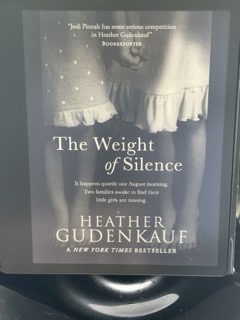 Heather Gudenkauf’s The Weight of Silence tells the story of Calli Clark, a seven-year-old girl who has not spoken in three years. Her silence began suddenly and remains unexplained to those around her. Although she understands language, she cannot bring herself to speak. Her condition closely reflects selective mutism, often linked to trauma and emotional distress.
Calli lives in a tense household with an abusive father and a fearful mother. Her home environment offers little security or comfort. As a result, silence becomes her way of coping. She retreats inward, using nonverbal cues and observation to interact with the world. One morning, Calli and her best friend Petra go missing. This event sparks a community-wide search and reveals hidden secrets. Throughout the crisis, Calli’s silence becomes a central aspect of the unfolding story. Her mutism is not just a symptom; it shapes how others understand and respond to her.
Gudenkauf portrays Calli’s inner world with care and depth. Despite her inability to speak, readers see her intelligence, strength, and emotional sensitivity. As events unfold, Calli begins to confront her trauma. Her journey toward finding her voice becomes both emotional and meaningful.
Speak by Laurie Halse Anderson
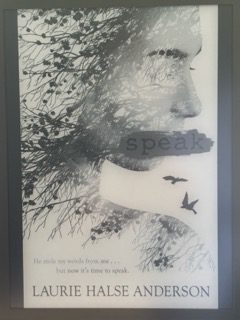 Melinda Sordino enters her first year of high school carrying a devastating secret. During a summer party, she experienced a traumatic assault that left her unable to speak about what happened. Consequently, her silence isolates her from friends and family who don’t understand her sudden withdrawal. Throughout the school year, Melinda struggles with selective mutism as a response to her trauma. She finds solace in her art class, where she begins to express herself through creative projects. Her art teacher, Mr. Freeman, recognises her talent and encourages her self-expression. Meanwhile, Melinda observes her former friends from a distance, feeling disconnected from their seemingly everyday teenage lives.
As the story progresses, Melinda slowly begins to find her voice again. She starts to process her trauma and recognise that her silence doesn’t protect her or others. Eventually, she confronts her attacker and speaks out about her experience. The novel demonstrates how trauma can temporarily steal someone’s voice, but also shows the possibility of healing and reclaiming one’s ability to communicate and connect with others.
Continue Your Journey: Personal Development and Selective Mutism
You’re not alone in this. These reads may help you explore, reflect, or take the next small step.
Looking to Enhance Your Reading Experience: Thoughtfully Chosen Accessories for Deep, Emotional Reads
Because reading about complex lives should come with simple comforts, discover accessories that support your experience.
- icon Dalton Cord Recliner Bean Bag, Beige, Large Adult Bean Bag Chair with Filling Included, Comfy Chair, Living Room Furniture, Bedroom Furniture
- Glocusent LED Neck Reading Light, Book Light for Reading in Bed, 3 Colors, 6 Brightness Levels, Bendable Arms, Rechargeable, Long Lasting, Perfect for Reading, Knitting, Camping, Repairing
- Vixar Reading is Always a Good Idea Book Reader Gift Presents Coloured Ceramic Mug Cup Gift 330ml 11oz Work Office Tea Coffee (G Yellow)
These are items I highly recommend. If you purchase after clicking on one of my affiliate links, I will earn a bit of coffee ☕️ money, which I promise to enjoy while reading and researching for my next blog, continuing to support you on your journey. You do not pay a higher price! 😊
Subscribe to My Newsletter
Welcome, and join me and a community of fellow book lovers!
As a thank you, when you sign up, I’ll also send you my personal reading list: a selection of books, poems, plays and short stories that explore mental illness in all aspects of life.