
Why Mariam’s Story Hits So Hard
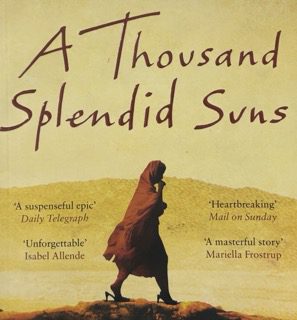
Mariam’s trauma – have you ever finished a book and felt like it rewrote something inside you? A Thousand Splendid Suns is one of them. I picked up a copy of A Thousand Splendid Suns at Heathrow Airport to take on the plane and couldn’t stop reading for the entire flight to Delhi.
At its heart lies Mariam, a woman whose life unfolds through pain, loss, and remarkable survival. Her story gives voice to countless women who suffer in silence. From childhood rejection to years of abuse, Mariam’s journey reflects the emotional scars that many of us carry. Yet it also reveals strength, courage, and quiet resilience that inspire hope.
Have you ever felt unheard, powerless, or betrayed by those meant to protect you? If so, Mariam’s story will resonate deeply with you. Her trauma feels personal because it mirrors the struggles many women face. Through her pain, we find uncomfortable truths – and perhaps even some healing. In our Instagram-perfect world, where everyone seems to have it figured out, Mariam’s trauma is raw vulnerability, which feels both shocking and strangely comforting.
Hosseini writes that “she would never leave her mark on Mammy’s heart the way her brothers had”. This early hint reveals how women become emotionally invisible, overlooked and undervalued. Later, when “Mariam wished for so much in those final moments,” we understand her lifelong yearning for love, dignity, and peace – desires that feel achingly familiar.
Before going any further, why not read a book review in The Guardian? Or, why not watch the following video? In it, Khaled Hosseini discusses his novel, A Thousand Splendid Suns.
Growing Up Unwanted
We’ve all felt unwanted at some point; perhaps it was being excluded from a friend group or feeling the disappointment of our family. But imagine carrying that feeling from the moment you’re born. Mariam enters the world carrying shame that isn’t hers to bear. Born out of wedlock, she becomes what her mother calls a harami (bastard). This label plants seeds of rejection that bloom throughout her childhood, and this is where my heart aches.
In our social media age, we’re constantly measuring our worth against others. For Mariam, that comparison begins with her father’s ‘legitimate’ children, the ones who inherit his name, his house, and his pride. Her father, Jalil, visits but never truly accepts her into his legitimate family. Consequently, Mariam grows up on the edge of society, loved conditionally but never entirely accepted. When she finally tries to enter her father’s world, he sends her away. This early trauma becomes the foundation of Mariam’s lifelong struggle with self-worth. She blames herself for her mother’s suicide and stops trusting others completely. Mariam’s experience of being labelled and shamed for circumstances beyond her control still feels painfully relevant in today’s world. For instance, the stigma that still surrounds women for being a single mother.
Hosseini shows us that “she was being sent away because she was the walking, breathing embodiment of their shame”. Meanwhile, her mother’s words, “It’s our lot in life, Mariam. Women like us. We endure”, plant roots of passive suffering that define Mariam’s worldview for decades. I immediately thought about how many of us also carry shame that was never ours to begin with.
Behind Closed Doors
Marriage to Rasheed begins with false kindness that quickly transforms into cruelty. After Mariam loses her baby, his affection turns to systematic abuse that controls every aspect of her existence. He dictates her clothes, movements, and meals. He calls her names, spits at her, and beats her with a belt. Gradually, Mariam loses her voice and lives in a state of constant fear.
Rasheed’s abuse breaks her spirit methodically. She begins believing she deserves the pain, a common effect of long-term domestic violence. Victims often internalise blame and doubt their worth completely. Mariam rarely speaks now, keeping feelings locked away. Her silence becomes a trauma response; she’s learned that speaking up brings punishment. Therefore, she endures quietly, surviving through submission. You may recognise some of these patterns from relationships you’ve observed, perhaps a friend, family member, or even your past. That sick feeling in your stomach when you read about Rasheed? It’s heartbreaking how Mariam starts believing she’s the problem. We’ve all been in situations where we questioned our reality (maybe after a toxic friendship or manipulative relationship), but imagine that doubt consuming your entire sense of self.
Hosseini’s portrayal feels painfully authentic. It shows how trauma isolates victims completely. Even surrounded by others, they feel profoundly alone. For many women, Mariam’s experience mirrors their reality.
When Rasheed tells her, “You can’t stop me, Mariam. Don’t even try,” his dominance demonstrates how power and fear silence victims. His cruel words, “What’s the sense schooling a girl like you? It’s like shining a spittoon”, reinforce her internalised worthlessness daily. This part of the book was hard for me to get through. I kept wanting to reach through the pages and tell Mariam she deserved better.
The Price of Staying Silent
Mariam’s trauma extends beyond personal abuse. In her world, women must endure quietly, obey without question, and survive without complaint. How many times have you been told to ‘keep the peace’ or ‘not make waves’? Mariam’s silence feels uncomfortably familiar. We live in an era where women are supposedly ’empowered,’ yet so many of us still feel safer staying small. Think about how often you’ve prefaced opinions with ‘I might be wrong, but…’ or apologised before stating facts.
This cultural silencing becomes trauma itself. For Mariam, staying silent means staying small and invisible. From childhood, she learns to swallow rejection and betrayal. As a wife, she endures abuse without protest. This pattern isn’t just personal; it’s systematic. Her world teaches her that silence equals safety. However, silence extracts a terrible price. It erases identity, dreams, and self-worth.
Hosseini highlights how damaging these expectations become. Mariam’s trauma isn’t just about individual suffering; it’s about societal suffering that remains unseen and unchallenged. The author shows us how “she lived in fear of Rasheed’s moods, his shifting eyes, the hush in his voice”. This fear erodes self-expression and identity completely. When she realises “what Nana meant… that a harami was an unwanted thing,” we see how internalised shame silences her for decades. While Mariam’s world might seem extreme, think about the subtle ways women today are still expected to be ‘agreeable’. How often do we police our voices before anyone else has to? Reading about Mariam’s forced silence made me think about all the times I’ve bitten my tongue to avoid confrontation. You might understand the weight Mariam carries if you’ve ever felt like your voice doesn’t matter. That feeling of being heard but not listened to? It’s exhausting.
How Trauma Manifests in Mariam’s Behaviour
If you’ve ever wondered why you flinch at raised voices, apologise for things that aren’t your fault, or feel your heart race in certain situations, this section may be relevant. Trauma shows up in ways we don’t always recognise. Trauma doesn’t just live in memories; it inhabits the body and shapes daily behaviour. Mariam’s responses reveal trauma’s lasting physical and emotional imprint. We all have those automatic responses that seem disproportionate to the situation at hand. You may over-apologise in group chats, avoid conflict at all costs, or feel physically tense around certain personality types. For Mariam, these responses aren’t quirks; they’re survival mechanisms.
Years of neglect and abuse create learned helplessness. Mariam doesn’t fight back or question orders. She apologises constantly, even when blameless. These behaviours are common among trauma survivors who fear making situations worse. Additionally, Mariam avoids eye contact and speaks minimally. She doubts her worth constantly, showing subtle signs of deep emotional damage. Trauma is evident in her posture, voice, and expectations.
Understanding Mariam’s trauma’s behavioural effects helps us see Mariam with greater empathy. What struck me most was realising that behaviours we might judge as ‘weak’, like Mariam’s silence or compliance, are incredible acts of survival. She’s doing whatever it takes to make it through each day. She isn’t weak or passive; she’s coping and surviving using every tool available. Reading about Mariam’s constant apologising made me pause and think about my habits. How often do I apologise just for taking up space, sharing my thoughts, or simply being myself? It’s unsettling to recognise these patterns in yourself. When Mariam accepts that “a woman’s face was her husband’s business only,” we see learned helplessness reinforced by culture and abuse.
Mariam’s Quiet Kind of Strength
Despite overwhelming suffering, Mariam remains unbroken. Her strength doesn’t announce itself loudly; it whispers through endurance and manifests in unexpected moments. Her final act becomes one of both sacrifice and power. She protects Laila and her children, even though it costs her everything. Most importantly, Mariam chooses to act, reclaiming her agency after years of powerlessness. This moment matters profoundly. Throughout her life, others had complete control over Mariam. However, in the end, she controls her own story and finds peace through purpose rather than escape.
Resilience takes many forms. Sometimes, it looks like staying rather than leaving. Sometimes, it means surviving one more day when hope seems impossible. Mariam’s strength lies in her endurance, loyalty, and quiet courage. Her trauma shapes but doesn’t define her completely. She remains kind, loyal, and brave even in pain. She finds moments of beauty and love despite overwhelming darkness.
This message may resonate powerfully with some readers. It tells us that strength appears in countless forms. Mariam’s life seems tragic, yet it’s never wasted. Her legacy lives on in Laila, the children she protected, and readers who carry her story forward. When “Mariam raised the shovel high… and brought it down,” her final act becomes both powerful and redemptive, proving that even broken people can choose courage.
That final scene had me in tears, but not only because it was sad. There was something incredibly moving about watching someone who’d been silenced her entire life finally choose her ending. It’s heartbreaking and empowering at the same time. Mariam’s legacy isn’t her suffering; it’s her choice to protect what matters most. That’s the kind of strength I hope to hold onto – quiet, fierce, and unshakable when it comes to protecting those I love.
What Mariam Taught Me
Mariam’s trauma runs deep, but her strength runs deeper. Her story reminds us that trauma doesn’t create weakness; it reveals our shared humanity. I’ve been carrying Mariam’s story with me for months now, and I keep thinking about how her quiet strength challenges everything I thought I knew about resilience. That’s why this book resonates so deeply; it doesn’t offer easy answers or neat endings, just the raw truth about surviving and choosing love anyway.
If you saw yourself in the story of Mariam’s trauma, whether it was her childhood feelings of not being enough, her struggle to find her voice or her fierce protection of the people she loved, you’re not in this by yourself. Whether you’re dealing with family trauma, relationship struggles, workplace harassment, or just the general overwhelm of being a young woman in 2025, Mariam’s story offers this: your pain doesn’t define your worth, and your survival is already proof of your strength. We’re a generation that’s learned to talk about trauma, therapy, and healing in ways our mothers couldn’t. But sometimes, we put pressure on ourselves to ‘heal faster’ or ‘overcome’ our past completely. Mariam’s story reminds me that healing isn’t linear, and strength doesn’t always present itself in an Instagram-ready way.
Conclusion
If you’re struggling with feelings of trauma, remember you’re not alone. Unlike Mariam, we’re fortunate to live in a time when mental health resources are more accessible than ever. There are various ways to reach out, including therapy, support groups, mental health apps, and online communities. For trauma support, check out the following NHS link or this factsheet Coping with TRAUMA.
Did you enjoy reading about Mariam’s trauma? If so, I’ve written a companion piece in which the protagonist, Eileen, struggles with both depression and trauma, and her messy journey towards self-discovery. For further reading, see my blog on Isolation and Depression in the Lonely Protagonist Eileen.
I’d love to hear your thoughts on Mariam’s trauma. Did it resonate with you? What moments stayed with you long after you closed the book? Drop a comment below! Stories like Mariam’s remind me why I love sharing books with you; they help us feel less alone in our own experiences. ❤️
Connect to Other Novels About Trauma
After reading about Mariam’s trauma, why not explore more novels featuring this theme? Why are these trauma novels important? These three novels provide crucial insights into how trauma impacts our lives and relationships. The Kite Runner illustrates how guilt and betrayal can create lasting psychological wounds that profoundly affect entire communities. Meanwhile, My Education explores the often-overlooked trauma of living inauthentically. Choi reveals how suppressing true identity creates deep psychological damage that manifests in destructive relationships. Similarly, Sharp Objects exposes the devastating effects of childhood abuse and family dysfunction. Flynn’s unflinching portrayal shows how trauma inscribes itself on the body through self-harm and addiction. These stories matter because they give voice to silent suffering while showing that recovery, though difficult, remains possible.
The Kite Runner by Khaled Hosseini
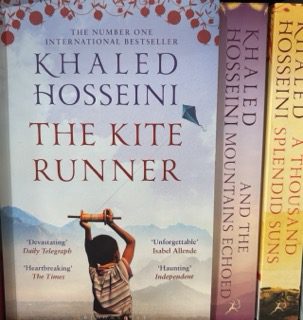 The Kite Runner follows Amir, a privileged Afghan boy whose childhood betrayal creates lifelong trauma. When he witnesses his servant’s son Hassan being brutally assaulted, Amir does nothing to help. This moment of cowardice haunts him for decades. The novel explores guilt-related trauma and its lasting psychological effects. Amir spends years avoiding his past, unable to form genuine connections. His trauma manifests through nightmares, anxiety, and deep self-loathing that affect every relationship.
Set against Afghanistan’s political upheaval, the story illustrates how personal trauma intersects with collective suffering. Consequently, Amir’s journey becomes both an individual healing process and a cultural reckoning. The Taliban’s rise destroys his homeland, mirroring his internal devastation. However, redemption becomes possible when Amir returns to Afghanistan as an adult. He finally confronts his past by rescuing Hassan’s son from dangerous circumstances.
Reading about Amir’s guilt-driven anxiety and self-sabotage felt painfully familiar to our therapy-speak generation. We recognise trauma responses now in ways previous readers might not have: his inability to form genuine connections, the way he punishes himself in relationships, and that constant internal voice telling him he’s not worthy of love.
My Education by Susan Choi
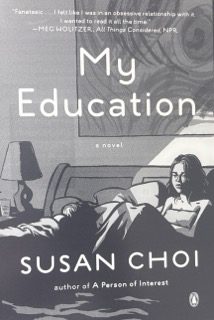 My Education centres on Regina, a graduate student whose stable marriage begins crumbling when she becomes obsessed with her professor’s wife, Martha. This unexpected attraction forces Regina to confront repressed aspects of her identity and sexuality.
The novel explores psychological trauma hidden beneath surface-level contentment. Regina initially appears satisfied in her conventional life, yet she feels disconnected from her desires. Her obsession with Martha awakens feelings she’s buried for years. Through Regina’s psychological journey, Choi examines how childhood emotional trauma shapes adult relationships. Regina’s family dynamics and past experiences have taught her to suppress authentic emotions. Consequently, she becomes detached from her husband and herself. The story unfolds during one intense summer that changes everything. Regina’s affair with Martha becomes both destructive and liberating, forcing her to examine her marriage and identity. This emotional awakening proves painful but necessary for growth.
Choi’s nuanced portrayal reveals how personal awakening can feel simultaneously like healing and destruction, showing trauma’s complex relationship with self-discovery and sexual identity exploration. We’re the generation that talks openly about sexual fluidity and emotional authenticity, so watching Regina discover parts of herself she’s been suppressing feels both liberating and terrifying.
Sharp Objects by Gillian Flynn
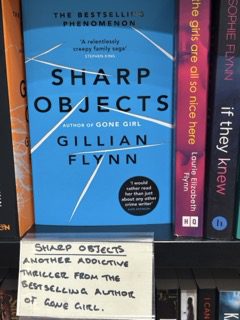 Sharp Objects follows Camille Preaker, a troubled journalist who returns to her hometown to cover a series of child murders. However, the assignment forces her to confront her dark past and the dysfunctional family relationships she has. Camille struggles with severe self-harm and alcoholism, destructive coping mechanisms for dealing with deep-seated trauma. She cuts words into her skin, literally wearing the pain on her body. This self-destructive behaviour stems from childhood abuse and maternal neglect. The investigation becomes deeply personal when Camille realizes the murders are connected to her family’s secrets. Her manipulative mother, Adora, has Munchausen syndrome by proxy and poisoned Camille’s younger sister years earlier. This revelation sheds light on Camille’s lifelong feelings of worthlessness and detachment.
Flynn expertly weaves together psychological thriller elements with themes of trauma recovery. As Camille investigates the murders, she simultaneously uncovers her own suppressed memories and begins processing years of abuse. The process proves both terrifying and cathartic. The novel demonstrates how childhood trauma creates lasting psychological wounds that affect every aspect of adult life. Camille’s story is brutal to read because her self-harm feels so visceral and honest. For anyone who’s struggled with self-destructive behaviours, watching Camille carry her trauma on her body hits incredibly hard.
Continue Your Journey: Personal Development and Trauma
You’re not alone in this. These reads may help you explore, reflect, or take the next small step.
Looking to Enhance Your Reading Experience: Thoughtfully Chosen Accessories for Deep, Emotional Reads
Because reading about complex lives should come with simple comforts, discover accessories that support your experience.
- All-new Amazon Kindle Paperwhite Signature Edition (32 GB) – Our fastest Kindle with an auto-adjusting front light, wireless charging and weeks of battery life – Metallic Black
- Caran Dache Ballpoint Pen, Orange, with SwissRide Blue Medium Cartridge
- Gritin 19 LED Book Light, Reading Light Book Lamp for Reading at Night with Memory Function, 3 Eye-Protecting Modes -Stepless Dimming, Long Battery Life, 360° Flexible Book Light for Bed,Tablet
These are items I highly recommend. If you purchase after clicking on one of my affiliate links, I will earn a bit of coffee ☕️ money, which I promise to enjoy while reading and researching for my next blog, continuing to support you on your journey. You do not pay a higher price! 😊
Subscribe to My Newsletter
Welcome, and join me and a community of fellow book lovers!
As a thank you, when you sign up, I’ll also send you my personal reading list: a selection of books, poems, plays and short stories that explore mental illness in all aspects of life.