Does the Duke in the poem “My Last Duchess” have a narcissistic personality disorder? Have you ever met anyone with a narcissistic personality disorder? Are they always monopolising the conversation? Do they always have a strong need for admiration and validation? Are they always ensuring they receive the attention and praise they crave?
As a Literature Teacher, I spent decades analysing complex characters with my students inside a classroom. This is why I have been fascinated by Robert Browning’s “My Last Duchess” since teaching the poem both at GCSE and A Level. I still find this poem chilling and relevant today. I’m particularly struck by how the Duke acts like a museum curator who treats people like his personal art collection. For this reason, I’m convinced the Duke has a narcissistic personality disorder.
The Duke and His Megalomania
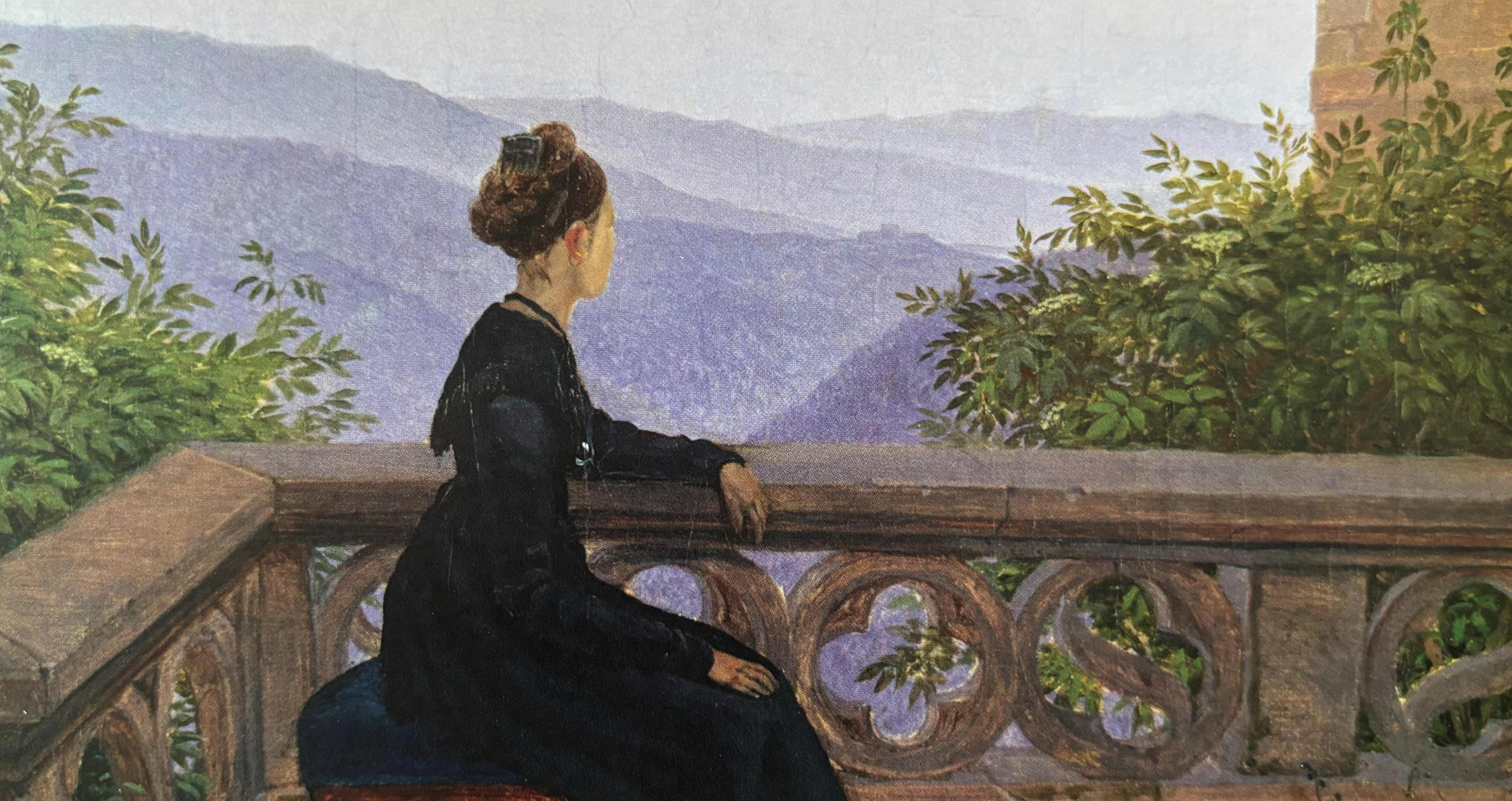
In this dramatic monologue, Browning masterfully reveals the Duke’s narcissistic personality disorder. He does this by presenting the protagonist as a nobleman showing off a portrait of his deceased wife. Simultaneously, he unveils his psychological character, which unravels into something sinister, exposing the Duke’s disturbing personality traits as fascinating and troubling.
From my decades in the classroom, I’ve spent countless hours discussing the Duke with students. Their perceptive insights have added an incredible depth to my understanding of the Duke’s complex personality. One significant key perception students have made is how the Duke controls the narrative throughout. And they have frequently commented on how his monologue format reflects his need to dominate the conversation. My students’ insights over the years have been endless. What starts as a seemingly innocent tour by the Duke quickly unravels into a portrait of a narcissistic personality.
Let’s dissect the Duke’s narcissistic personality disorder and explore how Browning, writing in 1842, managed to create a character with an accurate portrayal of narcissistic personality traits that could be related to anyone today.
Whether you’re approaching as a literature student, a literature enthusiast, or fascinated by complex characters, let’s pull back the curtain (just as the Duke does with his portrait) and examine one of literature’s most fascinating individuals. This way, we can better understand both the poem and similar personality patterns we might encounter in our own lives.
Let’s begin by listening to this beautiful reading of the poem by Tom O’Bedlam.
Historical and Literary Context
Imagine, it’s 1842 – and the height of the Victorian era! Then, Browning delivers this compelling psychological thriller, masterfully disguised as a dramatic monologue. It must be remembered that this poem is inspired by an actual historical figure, Alfonso II d’Este – a real Renaissance nobleman whose life reads like a true crime documentary. During my research, I was excited to discover that Alfonso II had been married three times. Moreover, his first wife died under mysterious circumstances. Is this life imitating art – or is it the other way round?
The Duke’s Narcissistic Personality Disorder
Browning doesn’t explicitly diagnose the Duke as having a narcissistic personality disorder. However, here are a few possible traits of what the Duke might have:
Self-centredness
- The Duke’s focus on his status and the need to control his perception are evident. First and foremost, he shows more concern with how he is portrayed and respected rather than the feelings or well-being of his late wife.
Entitlement
- The Duke feels entitled to absolute control and obedience from his wife. He expects her to conform to his standards and is angered when she does not. Most importantly, his intense need for control over his wife’s image and the desire to have her smile only for him could undoubtedly be seen as obsessive-compulsive tendencies. I think it’s fair to say the Duke is obsessed with the portrait of his late wife. Not to mention, his insistence that it should be kept behind a curtain suggests his desire to control and possess his wife, even in death.
Grandiosity
- The Duke’s sense of superiority is apparent as he describes himself as being of a higher status than his wife. He views his position and achievements as justification for his harsh actions. The Duke holds a high social position, and his authority and control are evident in his interactions and attitudes. He sees himself above others due to his noble lineage and wealth with “my nine-hundred-year-old name”. For this reason, he exhibits control over those around him, including his late wife, whom he orders around even in death.
Lack Of Empathy
- The Duke demonstrates an apparent lack of empathy by describing his late wife’s behaviour with disdain and frustration. Clearly, he cannot understand or appreciate her genuine feelings and reactions. The Duke’s jealousy and suspicion of his wife’s interactions with others could point to overly suspicious tendencies.
Control and Power
- Seriously, the Duke has an obsession with controlling his wife. He complains “she smiled too much”. Isn’t this classic controlling behaviour – just Renaissance style? Sounds very much like textbook coercive control!
Modern Narcissism Perspective
Here’s the thing about coercive control. According to recent studies by Dr Evan Stark, 95% of domestic abuse victims experience psychological manipulation before any physical abuse. With this in mind, I am convinced the Duke is giving a masterclass in it! Let’s break it down into patterns:
- Love bombing occurs when the Duke lavishes the Duchess with extravagant gifts, notably commissioning a grand portrait of her.
- Isolating the Duchess physically in her palace and controlling her access to the outside world. He becomes angry when she interacts with others: “she had/A heart – how shall I say? – too so made glad”.
- Gaslighting when he twists her normal friendly behaviour into flirtations: “too easily impressed”. He expertly makes her natural joy seem like a character flaw.
Narcissism Today
The narcissistic traits depicted in the poem “My Last Duchess“ eerily mirror our modern understanding of selfish behaviour. Today, narcissism is often linked to behaviours driven by self-promotion, entitlement, and a lack of regard for others’ feelings. Social media platforms can exacerbate these traits by fostering environments where self-presentation and validation are prioritised. In all probability, social media are platforms which amplify narcissistic tendencies by encouraging self-promotion and validation-seeking behaviours. Though the Duke’s actions might be extreme and tied to the historical and social contexts of his time, his underlying traits of grandiosity and lack of empathy resonate with contemporary discussions on narcissism. Working with literature students has revealed how these behaviour patterns have remained remarkably consistent since 1842. While the settings and manifestations of narcissism differ, core narcissistic behaviour remains consistent across both the Duke’s character and modern interpretations.
All things considered, Browning wasn’t just writing a poem; he was delivering the original true crime documentary. My A Level English students have concluded these patterns of narcissistic behaviour and control haven’t changed much since 1842. Now, we post them on Facebook, Instagram and TikTok.
If you recognise any of these patterns in your own relationships or those of friends, please remember that help is available. Don’t hesitate to reach out to a mental health professional. Information is available in the factsheet Narcissistic Personality Disorder. More information can be found on The Mayo Clinic Home Page, which covers symptoms, causes, diagnosis and treatment. Whilst the Duke might be fictional, his behaviours are very real and dangerous.
Ready to Unpack the Duke’s Narcissism?
What do you think about the Duke’s psychological profile? Would you like to connect and share your thoughts about the Duke’s diagnosis? Drop them in the comments box below! I’d love to hear your insights. If you found this analysis helpful, share it with your literature-loving friends. Trust me, nothing starts a better discussion than a deep dive into fictional characters’ minds behind our favourite literary villains!
Did you enjoy reading about the Duke and his possible narcissistic personality disorder? If so, I’ve written a companion piece about another male protagonist and his delusions and rebellious nature against everything in society in my blog post, Delusion and Defiance in Johnny Rooster Explored by Jez Butterworth.
More Literature Featuring Narcissistic Personality Disorder
Why are these novels important? The Great Gatsby, Lolita, and Gone Girl offer profound insights into the destructive power of narcissistic obsession. In essence, all three novels feature protagonists driven by narcissistic obsession, and their narcissistic traits inevitably spiral toward destruction. Eventually, each protagonist’s narcissistic delusions lead to destruction, whether through their own choices or their poisonous interactions with others.
The Great Gatsby by F. Scott Fitzgerald. Jay Gatsby
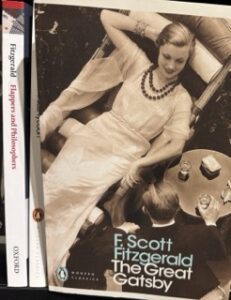 The protagonist, Jay Gatsby, emerges as another fascinating study of narcissistic behaviour. He reinvents himself from James Gatz to Jay Gatsby, creating an idealised persona. In need of admiration, he throws lavish parties to attract attention and gain social status. Gatsby seems oblivious to the feelings of others, particularly in his pursuit of Daisy. His single-minded pursuit of Daisy borders on delusion and his fundamental inability to see beyond his desires.
Lolita by Vladimir Nabokov
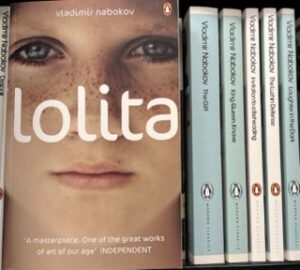 Lolita is a controversial novel. Narrated by Humbert Humbert, a middle-aged literature professor with an obsessive attraction to young girls. The story focuses on his infatuation with 13-year-old Dolores Haze, nicknamed Lolita. The novel’s narrator and protagonist, Humbert, displays several narcissistic traits throughout the story. On the one hand, Humbert consistently portrays himself as intellectually and culturally superior to others. However, he shows little genuine concern for Lolita’s well-being, seeing her primarily as an object of his desires. Humbert often fantasises about his relationship with Lolita and his perceived specialness. His elaborate fantasies about their ‘relationship’ reveal both his narcissistic delusions and his complete disconnection from the reality of his abuse.
Gone Girl by Gillian Flynn
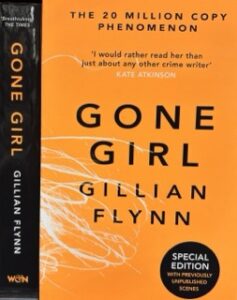 In Gone Girl, after Amy Elliot Dunne’s disappearance, the investigation reveals her narcissism traits from her childhood and in her adulthood. Growing up as the inspiration for her parents’ “Amazing Amy” books, she developed classic narcissistic characteristics. These are an overwhelming sense of grandiosity, a desperate need for admiration, and a chilling lack of empathy for others. Her marriage to Nick reveals an equally troubling dynamic. Though less extreme, Amy’s husband, Nick, also has some narcissistic tendencies. He is mainly obsessed with his public image and struggles with empathy and emotional connection. Their marriage is a clash of two narcissistic personalities where they both prioritise their own needs over their partner’s, using manipulation and deceit in their interactions.
Continue Your Journey: Personal Development and Narcissistic Personality Disorder
You’re not alone in this. These reads may help you explore, reflect, or take the next small step.
Looking to Enhance Your Reading Experience: Thoughtfully Chosen Accessories for Deep, Emotional Reads
Because reading about complex lives should come with simple comforts, discover accessories that support your experience.
- New Amazon Kindle (16 GB) – Lightest and most compact Kindle with glare-free display, faster page turns, adjustable front light and long battery life – With Ads – Black
- I-WILL Book Ends for Shelves Heavy Duty Metal Desk Bookends Decorative Tree Unique Design Book Stopper Supports Non Skid Bookshelf Holder Stand for Kids Children Adults in Office and School – Black
- RoselandFurniture London Oak Low Bookcase Small Solid Wood Bookshelf with 3 Shelves for Living Room, Bedroom or Hallway 82 x 70 x 22.5 cm
These are items I highly recommend. If you purchase after clicking on one of my affiliate links, I will earn a bit of coffee ☕️ money, which I promise to enjoy while reading and researching for my next blog, continuing to support you on your journey. You do not pay a higher price! 😊
Subscribe to My Newsletter
Welcome, and join me and a community of fellow book lovers!
As a thank you, when you sign up, I’ll also send you my personal reading list: a selection of books, poems, plays and short stories that explore mental illness in all aspects of life.