Meet Nora and Her Struggle
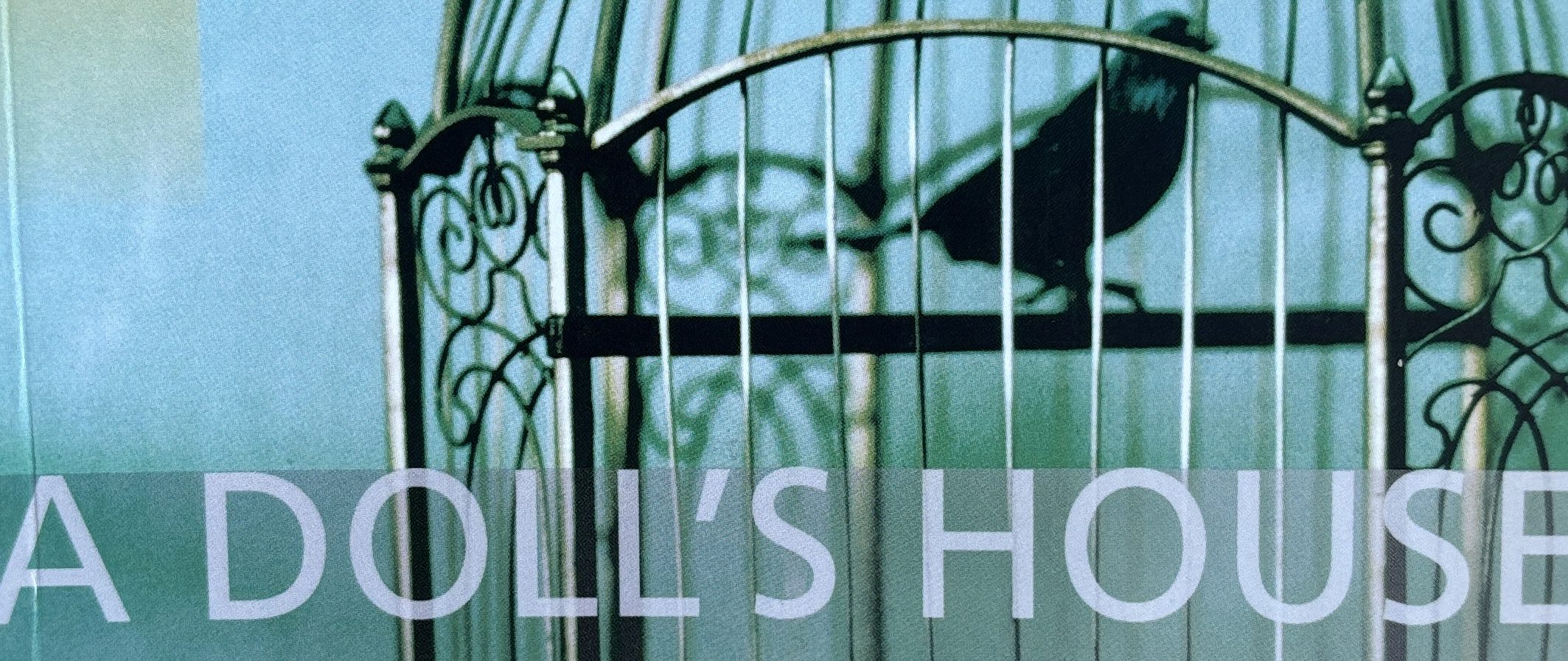
Nora’s DPD takes centre stage in Henrik Ibsen’s A Doll’s House, revealing how dependence shapes her choices and identity. Nora Helmer captivates audiences with her lively spirit, warmth, and charm. At first glance, she seems playful and carefree, a perfect wife in a comfortable home. Torvald calls her, “Is that my little skylark twittering out there?” (Act I). His affectionate words highlight how Nora’s identity is shaped by his approval. Yet beneath her bright exterior lies a woman struggling with dependency, fear, and hidden anxiety.
What makes Nora’s story resonate is how familiar her behaviour feels. Many readers and viewers recognise moments of over-reliance in relationships, even if they have never heard of “dependent personality disorder” (DPD). Her constant search for approval, her fear of conflict, and her tendency to put others first reflect deeply human traits, yet her condition magnifies these traits. Understanding Nora’s DPD gives us insight into her actions and the choices that drive the play. It also shows why her eventual transformation is so powerful. In this post, we explore what DPD is, how Nora embodies it, and how social and personal pressures shape her journey. By the end, you will see that her story is not just about dependency, but also about courage, change, and the pursuit of independence.
Before proceeding, why not read a short article, “Blaming Nora”, in The Guardian, where A.S. Byatt revisits Ibsen’s tragic heroine, once seen as shocking, and now views her as naive and lacking sensitivity. Or, why not watch the following video by The Guardian, a short film responding to Henrik Ibsen’s A Doll’s House? You can listen to the full audiobook of A Doll’s House by Henrik Ibsen here.
Understanding Dependent Personality Disorder
Dependent personality disorder (DPD) is a mental health condition marked by an excessive need for reassurance and support. People with DPD often fear being abandoned, and they may find even simple decisions overwhelming without guidance from others. This reliance creates a cycle where relationships feel safe but autonomy feels dangerous.
Some key traits of DPD include:
- Difficulty making decisions independently.
- Seeking constant reassurance or approval.
- Avoiding conflict to prevent rejection.
- Feeling anxious or helpless when alone.
To put this in perspective, someone with DPD might wait for their partner to decide what to eat, even if they have preferences. In more serious cases, they may stay in harmful or unbalanced relationships because the fear of being alone feels worse than the cost of staying.
It is important to note that dependency exists on a spectrum. Many people lean on loved ones for comfort, especially in stressful times. What distinguishes DPD is the intensity and consistency of this reliance. The disorder can limit a person’s growth, confidence, and ability to make decisions. Still, DPD does not define an individual entirely. With awareness, therapy, and supportive relationships, many people can build healthier patterns.
When we apply these traits to Nora’s behaviour in A Doll’s House, her struggles begin to make sense. Her actions, which may seem naïve or submissive, reflect the deep pull of dependency. At the same time, her eventual break from this pattern highlights the possibility of growth and change.
When I taught A Doll’s House to my A-Level students, many were surprised by how modern a character like Nora felt. Despite the play’s 19th-century setting, her struggles with dependency and self-identity resonated strongly with them. Their reactions reminded me how universal these themes remain, especially for young women navigating independence today.
Spotting Nora’s DPD in the Play
Nora’s behaviour throughout A Doll’s House clearly reflects traits of DPD. She tends to avoid conflict, seeks reassurance, and struggles to act independently. Early in the play, she hides her financial loan from Torvald. She insists, “It was I who saved Torvald’s life” (Act I). Though her actions are brave, her secrecy reveals fear of his disapproval.
Nora also avoids asserting herself directly. She tells Torvald, “I should not think of going against your wishes” (Act I). This statement shows her reluctance to challenge him, even when her own judgment differs. Later, she admits, “Tell me what to do, Torvald. I will think as you think” (Act II). Such words demonstrate her dependence on his guidance and approval. Her cheerfulness and charm, meanwhile, act as a mask. Nora performs the role of the ideal wife, keeping household harmony while concealing her anxieties. On the surface, she is playful and loving. Underneath, she fears losing her husband’s love and the security it provides. This tension creates much of the drama in the play.
By spotting these patterns, we see how deeply Nora’s DPD influences her relationships. Her dependency is not simply a flaw but a psychological struggle, intensified by social expectations. This complexity makes her character compelling, as audiences watch her balance charm, fear, and a desperate desire for approval.
The Role of Society and Trauma
Nora’s dependency on Torvald is deeply tied to the social context in which she lives. In 19th-century Norway, women were expected to obey their husbands and devote themselves to the household. Independence was discouraged, leaving women like Nora with few options. When Torvald insists, “No debts! Never borrow! A home that depends on loans is not beautiful” (Act I), he reflects the rigid control men held over family finances. Nora also links her struggles to her upbringing. She recalls, “I have been your doll-wife, just as at home I was Papa’s doll-child” (Act III). This admission reveals how both her father and her husband shaped her identity, teaching her to obey and please rather than act independently. Her life has been one long rehearsal of dependency.
Trauma deepens this pattern. The stress of hiding her loan, the fear of Torvald’s judgment, and the weight of secrecy push her further into dependency. These experiences magnify her anxiety and make her terrified of stepping outside her role. By recognising this context, we see Nora’s behaviour not as weakness but as a product of her environment. Society and personal history taught her that safety lay in submission, not independence. Understanding this makes it easier to empathise with her choices while still acknowledging the cost of her dependency.
My students often debated whether Nora’s dependency was her fault or a product of her environment, which sparked meaningful conversations about gender roles, both in 19th-century Norway and in today’s world. Many of them related this to pressures they feel in their own lives, which showed me how powerfully Ibsen’s play still speaks across generations. For example, the pressure they feel about succeeding academically or planning their futures. With social media, students feel compelled to curate a version of themselves that looks “confident” and “perfect”.
Nora Realises Her Dependency
The climax of A Doll’s House comes when Nora begins to see her dependence clearly. She notices how fear, avoidance, and control have shaped her life. For the first time, she questions her role as wife and mother. She tells Torvald, “I believe that I am first and foremost a human being, like you” (Act III). These words mark a dramatic shift in her thinking. Facing this truth is terrifying. Breaking free means risking security, comfort, and reputation. Yet Nora also realises that she cannot grow if she remains dependent on others. She insists, “I must stand quite alone if I am to understand myself and everything about me” (Act III). This recognition reflects the core struggle of DPD, wanting independence but fearing abandonment.
Her choice to leave Torvald is shocking, both to the audience and within her cultural context. When the play was first performed, the audience was outraged at Nora’s decision to leave, whilst some critics considered it “immoral” and condemned the ending as unrealistic. Yet it represents the beginning of self-discovery. For Nora, independence means stepping into uncertainty and trusting her ability to survive. This moment resonates beyond the play. It shows how acknowledging dependency is the first step toward growth. Nora’s courage lies not in having all the answers, but in daring to ask the questions. Her decision reminds us that independence is not a gift; it is something we must claim, even when it feels terrifying.
What We Can Learn from Nora’s DPD
Nora’s story carries lessons for us today. Her dependency shows how people sometimes cope by leaning too heavily on others. Rather than judging this, we can recognise it as a response to fear, stress, or social pressure. Understanding this creates empathy. Her journey also shows the power of awareness. Nora realises that she has lived as a “doll”, controlled by others. She reflects, “I must try to educate myself” (Act III). Awareness leads her to growth, even though it requires painful change. Similarly, we can reflect on our own patterns of dependence. Do we wait for others to decide for us? Do we silence our opinions to avoid conflict? Recognising these moments is the first step towards balance.
Importantly, Nora’s story reminds us that independence does not mean isolation. Healthy relationships involve interdependence, a balance where support exists without loss of identity. Nora’s dramatic break is extreme, but her insight is timeless: growth requires both courage and self-compassion.
For modern readers, especially young women, her journey highlights the importance of self-awareness in relationships. We can value love and partnership while also holding onto our sense of self. Nora’s decision inspires us to reflect on our stance between reliance and autonomy, and how we might achieve a healthier balance.
Reflecting on Nora’s DPD
Nora’s DPD shapes her every choice in A Doll’s House, from her secrecy to her avoidance of conflict. Through her journey, we see the impact of dependency, the weight of societal expectations, and the challenge of personal growth. She reminds us that breaking free is never easy, but it is possible. In her final words to Torvald, she declares, “I am going to see if I can make out who is right, the world or I” (Act III). This statement captures both her fear and her courage. Nora’s story is about more than dependency; it is about the search for truth and identity.
By reflecting on her journey, we can better understand the struggles of DPD and its impact on relationships. We can also take inspiration from her bravery. What would independence look like in your own life? Could you take steps today to strike a balance between reliance and personal agency? Nora’s story encourages us to ask these questions. Her struggle is not only a window into mental health but also a reminder of the strength it takes to grow.
When I’ve taught A Doll’s House, the most powerful moment for students is always Nora’s final decision to leave. Some describe it as shocking, while others find it inspiring. Still, nearly all recognise the courage it takes to step away from dependency. Their responses remind me that the play is not only about one woman’s struggle, but also about the universal challenge of finding independence. This theme still resonates powerfully today.
Struggling with Dependent Personality Disorder?
If you’re considering counselling, the Counselling Directory is a valuable place to begin. You can connect with trained professionals who can guide you in developing greater confidence and independence. In the UK, the NHS also offers treatment for dependent personality disorder, often through talking therapies such as CBT.
Nora’s struggles also echo those of Mariam in A Thousand Splendid Suns. While their lives are worlds apart, both women navigate marriages marked by control and expectation. Where Nora’s dependency grows out of societal roles and fear of rejection, Mariam’s arises from trauma and endurance in the face of hardship. Each highlights how dependency can take shape differently, yet both stories reveal the resilience required to step toward independence.
I’d love to hear your thoughts. Did Nora’s journey strike a chord with you? Were there moments from the play that lingered with you afterwards? Share your reflections in the comments below; I always enjoy hearing how these stories resonate with you.
Connect to Other Plays About Dependent Personality Disorder
After reading about Nora’s DPD why not consider reading more short stories that explore dependent personality disorder? Why are these plays important? Alan Ayckbourn’s Absurd Person Singular and Haunting Julia, alongside Henrik Ibsen’s Hedda Gabler, each reveal how dependency shapes lives in subtle yet powerful ways. Eva’s quiet fragility in Absurd Person Singular shows how avoidance and fear of conflict can mask resilience. In Haunting Julia, grief becomes dependency, with characters clinging to memory instead of moving forward. Meanwhile, Hedda’s restless need for approval exposes a more complex, controlling face of DPD. Together, these plays highlight how dependency, whether quiet, obsessive, or masked by control, can define relationships, limit autonomy, and reveal the universal struggle for selfhood.
Absurd Person Singular by Alan Ayckbourn
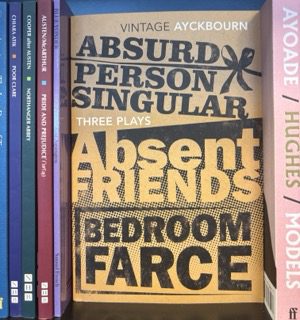 Alan Ayckbourn’s Absurd Person Singular is a darkly comic exploration of shifting power in relationships. Across three Christmas gatherings, the play exposes how dependency can quietly govern lives. I was particularly struck by Eva, whose depression and passivity reveal traits often linked with dependent personality disorder. She struggles to assert herself, instead relying on others to define her worth and direction. At first, her silence and fragility make her seem invisible, yet her presence grows more powerful as the others unravel. Watching her, I couldn’t help but reflect on how dependency can be both a prison and a hidden source of strength. Eva’s journey mirrors the subtle but painful ways DPD manifests, through avoidance, withdrawal, and fear of conflict, yet also reminds us of the possibility of change, even in the bleakest settings.
➡ Read more: Nora’s DPD in A Doll’s House
Haunting Julia by Alan Ayckbourn
 In Haunting Julia, Ayckbourn presents a story of grief, memory, and emotional reliance that lingers long after the curtain falls. Julia never appears on stage, yet her absence dominates the lives of the men around her. I found it striking how their obsessive need to hold onto Julia reflects traits of dependency. Instead of building lives beyond her, they remain trapped, anxiously clinging to her memory for reassurance and a sense of identity. Their fixation mirrors aspects of dependent personality disorder: fear of loss, avoidance of autonomy, and reliance on a single figure for meaning. What moved me most was how absence itself can fuel dependency just as powerfully as presence. This play left me considering how difficult it can be to let go, and how dependency can shape relationships even with someone who is no longer there.
➡ Read more: Mariam’s Trauma in A Thousand Splendid Suns
Hedda Gabler by Henrik Ibsen
 Henrik Ibsen’s Hedda Gabler is often read as a tragedy of control and repression. Still, it also reveals dependency in a different form. Hedda may appear commanding, even manipulative, yet I was struck by how dependent she is on the approval and attention of others. Her restless energy masks an inner fear of insignificance, a trait that echoes the struggles of dependent personality disorder. Rather than make independent choices, she clings to social expectations, fearing scandal and rejection. In her marriage, she feels trapped, unable to love, yet unwilling to break free from it. For me, Hedda’s story highlights how dependency can take many forms: it isn’t always submissive. Still, it can appear as controlling behaviour born of fear. Her tragic end underscores the cost of never finding authentic independence, and it left me thinking about how fragile identity can become when built on dependency.
➡ Read more: Nora’s DPD in A Doll’s House
Dependent Personality Disorder Personal Development:
Looking to Enhance Your Reading Experience?
- icon Dalton Cord Recliner Bean Bag, Beige, Large Adult Bean Bag Chair with Filling Included, Comfy Chair, Living Room Furniture, Bedroom Furniture
- Glocusent LED Neck Reading Light, Book Light for Reading in Bed, 3 Colors, 6 Brightness Levels, Bendable Arms, Rechargeable, Long Lasting, Perfect for Reading, Knitting, Camping, Repairing
- Vixar Reading is Always a Good Idea Book Reader Gift Presents Coloured Ceramic Mug Cup Gift 330ml 11oz Work Office Tea Coffee (G Yellow)
-
HGOD DESIGNS Ethnic and Tribal Pattern Blanket Throw Blanket 100x130cm
- Amazon Kindle (16 GB) – Lightest and most compact Kindle with glare-free display, faster page turns, adjustable front light and long battery life – With Ads – Black
These are items I highly recommend. If you purchase after clicking on one of my affiliate links, I will earn a bit of coffee ☕️ money, which I promise to enjoy while reading and researching for my next blog, continuing to support you on your journey. You do not pay a higher price! 😊
Subscribe to My Newsletter
Welcome, and join me and a community of fellow book lovers!
As a thank you, when you sign up, I’ll also send you my personal reading list: a selection of books, poems, plays and short stories that explore mental illness in all aspects of life.