
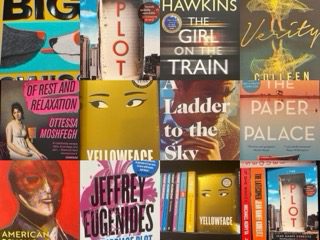
Protagonists with narcissistic traits fill today’s novels with their fascinating complexity. I’m always drawn to their inflated self-importance and manipulative behaviours. These characters lack empathy but still demand everyone’s attention and praise. Their deep flaws often create the most compelling stories in modern books. Real-life narcissists might ruin relationships, but fictional ones give us exciting drama. They move through stories with selfish intentions and irresistible charm.
These characters make others either bend to their will or face the fallout. When I peek into their minds, I find dark thoughts that keep me turning pages. I often catch myself both hating and loving their schemes. Writers create these personalities to show us the darker sides of human nature. Through them, we see how self-centred we can all be sometimes. Plus, we learn how narcissism hurts communities and relationships. The ten books I’m featuring below show narcissistic main characters in various situations. Each one uniquely shows selfishness and entitlement.
If you decide to delve into any of these novels – hopefully you will – and as you meet these complicated characters, you’ll discover new perspectives on self-absorption and its effects. They remind us why narcissists are some of the most memorable figures in fiction. These stories help you spot narcissistic patterns in your life and reading. Read the summaries below and the reviews accompanying them, and hopefully, you will jump into these captivating characters who will undoubtedly keep you hooked!
The Marriage Plot: Love, Academia, and Self-Absorption
 In Jeffrey Eugenides’s The Marriage Plot, narcissism shapes a complex love triangle at Brown University. Initially, Madeleine, a protagonist with narcissistic traits, studies Victorian literature while handling relationships steeped in self-absorption.
Firstly, Leonard Bankhead fascinates her with his brilliant mind, but his narcissistic traits consume her attention entirely. Additionally, his bipolar disorder creates an uneven dynamic, and consequently, his needs always dominate hers. Meanwhile, Mitchell Grammaticus holds an unhealthy obsession with Madeleine. His narcissism shows in his entitled belief that she belongs to him. Furthermore, he views his spiritual journeys through a self-centred lens. After graduation, Madeleine follows Leonard to a research facility. As their relationship intensifies, she sacrifices her own ambitions, reducing her identity in his shadow.
Throughout the novel, self-interest poses as love. Leonard demands care without giving back, while Mitchell slots Madeleine into his perfect life. Ultimately, Eugenides reveals how narcissism poisons real connection. As a result, characters blindly project desires onto each other, eventually growing beyond these patterns, though painfully. In conclusion, the novel offers insights into love’s limitations when spoiled by narcissism. Therefore, it connects with readers who examine self-centred dynamics in their relationships.
The Guardian Review: What does marriage in fiction mean in an age of prenups and divorce?
American Psycho: The Ultimate Narcissist
 Bret Easton Ellis’s American Psycho presents Patrick Bateman as a Wall Street banker who shows extreme narcissism. Initially, his self-absorption is clear in his obsession with status and appearance. Notably, Bateman carefully lists his designer clothing and skincare routines. He also obsessively compares himself to colleagues, resulting in intense envy over better business cards or reservations. Beyond materialism, his narcissism infects all relationships. For instance, he views women purely as status-boosting objects. Likewise, he maintains friendships only for social climbing and validation.
Throughout the novel, Bateman describes increasingly violent acts against various victims. These disturbing episodes reveal his complete lack of empathy. Additionally, his detailed narration shows his need for attention and shock value. Interestingly, Ellis blurs reality by suggesting Bateman’s crimes might exist only in his mind. This uncertainty connects narcissism with detachment from reality; it implies his self-absorption creates a basically distorted worldview. Ultimately, Ellis uses Bateman to criticise 1980s consumer culture and toxic masculinity. The protagonist’s narcissistic traits mirror broader societal values. As a result, readers question where individual sickness ends, and cultural sickness begins. In conclusion, despite its graphic content, the novel powerfully examines narcissism’s destructive potential, serving as a disturbing yet insightful portrait of extreme self-obsession.
The New York Times: In Hindsight, an ‘American Psycho’ Looks a Lot Like Us
Big Swiss: Self-Absorption and Secret Obsessions
 In Jen Beagin’s Big Swiss, typist Greta displays deep narcissistic traits in Hudson, New York. Initially, she breaks boundaries by obsessing over a client’s therapy recordings. Specifically, Greta nicknames the Swiss-born client Big Swiss due to her accent and presence. She purposely creates a ‘chance’ meeting with Flavia, the client’s real name. Soon after, the women begin an intense affair built on deception. Greta’s narcissism emerges through her manipulative hiding of her true identity. Additionally, she builds complex excuses that put first her desires.
Throughout their relationship, Flavia unknowingly shares secrets Greta already knows. Meanwhile, Greta uses Flavia as an escape from her unresolved trauma. Their connection develops on a foundation of lies. Greta’s extreme self-absorption prevents real intimacy between them. For instance, she treats Flavia as a fantasy rather than a complete person. Moreover, her inability to establish healthy boundaries reflects classic narcissistic patterns.
Despite the dark subject, Beagin crafts humorous scenes highlighting Greta’s entitlement. Readers witness how narcissistic traits certainly damage relationships. In conclusion, as tensions rise, Greta must confront her narcissistic tendencies or lose everything. Therefore, Big Swiss offers a gripping examination of obsession and self-serving narratives.
The Guardian Review: Big Swiss by Jen Beagin review – fluffy sex comedy with a dark underbelly
The Paper Palace: Desire and Self-Deception
 Miranda Cowley Heller’s The Paper Palace looks at Elle Bishop’s subtle narcissistic traits. Initially, her self-absorption emerges through her pursuit of desires regardless of consequences. The story unfolds over 24 hours at a Cape Cod summer camp. Here, Elle has sex with childhood love Jonas while families socialise nearby. After this, she chooses between her husband, Peter and her passion for Jonas. Elle’s narcissistic tendencies appear in her defence of infidelity. For instance, she puts emotional needs above marital commitments, and her self-focus blinds her to potential family damage.
Throughout the novel, the story switches between present events and Elle’s traumatic past. Her mother, Wallace, displays classic narcissistic traits through manipulative parenting. As a result, Elle develops unhealthy relationship patterns continuing into adulthood. Elle’s self-absorption always shapes her decisions. She views Jonas through a perfect lens.
Meanwhile, she struggles to see how her choices affect her husband and children. Generational family secrets reveal repeated narcissistic behaviours. As a result, patterns of manipulation and emotional damage repeat across decades. Characters regularly choose personal gratification over integrity. In conclusion, Heller crafts a subtle exploration of narcissism in family dynamics, and Elle must confront whether her desire represents real love or a self-serving escape.
The Guardian Review: In brief: Idol; The Paper Palace; Dinner With Joseph Johnson – review
Yellowface: Ambition, Identity, and Extreme Narcissism
 R.F. Kuang’s Yellowface focuses on June Hayward, an average white author driven by narcissistic ambition. The protagonists narcissistic traits of extreme self-interest initially appears when she witnesses literary star Athena Liu’s death. Instead of seeking help, June steals Athena’s unpublished manuscript about Chinese workers in WWI. Later, she publishes it under the pen name Juniper Song, beginning her deception.
Notably, June’s narcissism manifests through her complete lack of remorse. For instance, she convinces herself that she deserves Athena’s success and takes her Asian identity to market herself and the novel. After publication, The Last Front became a critical bestseller. Meanwhile, June dismisses any concerns about cultural appropriation and presents herself as an authority on Asian American experiences.
Throughout the novel, June’s self-absorption prevents genuine self-reflection. She judges relationships solely through their career usefulness, so she grows increasingly paranoid about potential exposure. Kuang skilfully crafts a harsh critique of racism in the publishing industry. June’s narcissistic traits mirror broader issues of entitlement in literary circles. Readers witness how ambition corrupts artistic integrity. In conclusion, as suspicions grow, June’s carefully constructed mask crumbles. Therefore, Yellowface delivers a powerful exploration of identity theft and the destructive power of extreme narcissism.
The Guardian Review: Yellowface by Rebecca F Kuang – a wickedly funny publishing thriller
The Plot: Literary Theft and Self-Deception
 Jean Hanff Korelitz’s The Plot examines Jacob Finch Bonner’s deep-seated narcissism. Initially, the protagonist’s narcissistic traits appear in his selfish attitude while teaching at a part-time MFA program. During this time, Jacob meets Evan Parker, an arrogant student with a brilliant novel concept. Later, he discovers Evan has died without publishing his work, and Jacob faces a tempting opportunity.
Soon after, his narcissistic tendencies flourish when he steals Evan’s plot idea. He justifies this theft through elaborate rationalisations about deserving success. Also, he dismisses moral concerns about exploiting a dead student’s work. Following publication, Jacob’s novel Crib becomes a massive bestseller. He enjoys praise, wealth, and a movie deal from his stolen work. At the same time, he pushes down occasional guilt by focusing on his newfound status. Jacob’s selfishness grows when threatening messages arrive, exposing his secret. Rather than confess, he investigates to silence the threat. As a result, his narcissistic traits drive him deeper into lying.
Throughout the story, Jacob maintains purely transactional relationships; he views others solely through their usefulness to his ambitions. Similarly, his empathy extends only to fictional characters, never real people. In conclusion, Korelitz crafts a suspenseful exploration of artistic theft and fraudulent identity. Therefore, The Plot powerfully demonstrates how narcissistic entitlement distorts moral boundaries.
The Guardian Interview: Jean Hanff Korelitz: ‘I wanted to be a literary novelist. But I realised that I liked plot’
Verity: Manipulation and Self-Preservation
 Colleen Hoover’s thriller Verity features two female protagonists driven by narcissistic tendencies. Their selfishness fuels a narrative of lying and moral compromise.
Struggling writer Lowen Ashleigh accepts an offer to complete famous author Verity Crawford’s series. While researching at Verity’s home, she discovers a hidden autobiography revealing disturbing truths. Also, the manuscript suggests Verity’s possible role in her daughters’ deaths. As Lowen digs deeper, her narcissistic traits emerge. She deliberately hides important information from Jeremy, Verity’s husband. Instead, she pursues him romantically while Verity remains bedridden upstairs. Also, Lowen justifies her deception as protection rather than admitting selfish motives.
Both women always put first desires above moral considerations. They view relationships mainly as a means to personal fulfilment. Meanwhile, their empathy reaches only to those who serve their goals. The novel ends in shocking discoveries about the manuscript’s authenticity. As a result, Hoover creates an ambiguous ending that questions both women’s reliability. Readers must finally decide whose narcissistic perspective represents the truth. Basically, Verity explores female protagonists narcissistic traits in competitive situations, demonstrating how self-preservation justifies increasingly destructive choices.
Book Review: Verity by Colleen Hoover
A Ladder to the Sky: The Narcissistic Pursuit of Literary Fame in
 Maurice Swift wants only one thing: literary fame. His endless ambition, however, is held back by a major flaw—he lacks original ideas. When Maurice meets famous novelist Erich Ackermann, he spots an opportunity. Cleverly, he charms the older writer into revealing a dark secret from his past. Maurice transforms this confession into his debut novel, launching his career and destroying Erich’s reputation. As he climbs the literary ladder, Maurice’s narcissistic traits become increasingly evident. Indeed, people are used just as stepping stones. Once they serve no purpose, he discards them without remorse. His charming front hides a calculating mind focused on status and recognition.
Throughout the story, Maurice’s exploitation continues without stopping. He marries a talented writer, steals manuscripts, and manipulates colleagues for personal gain. Also, he never admits the damage he causes. Instead, he justifies his actions through his desperate need for praise.
The novel presents a powerful character study of extreme narcissism. Maurice displays classic signs: grandiose self-importance, exploitation of others, and profound lack of empathy. Additionally, he requires constant admiration and believes he deserves special treatment. By shifting perspectives, readers witness Maurice through different eyes, revealing the destructive wake of his narcissistic pursuit.
The Guardian Review: A Ladder to the Sky by John Boyne review – deliciously dark
The Girl on the Train: The Narcissistic Web
 Rachel Watson takes the same commuter train daily. During routine stops, she watches a seemingly perfect couple from her window. Through Rachel’s perspective, we enter a world twisted by alcoholism and obsession. As a result, she makes up detailed fantasies about strangers while her own life falls apart. When the woman Rachel watches disappears, she becomes involved in the investigation. Unfortunately, her unreliable memories only complicate matters further.
The story revolves around three women: Rachel, Megan (the missing woman), and Anna (Rachel’s ex-husband’s new wife). Each tells her own story, gradually revealing unexpected connections between them. Tom, Rachel’s ex-husband, shows classic narcissistic traits throughout. He skilfully manipulates all three women at the same time. Also, he consistently gaslights Rachel, exploiting her alcoholism and memory gaps.
Tom constructs different realities that serve his needs. He shows no genuine empathy for others. Instead, he views relationships merely as transactions for personal gain. His charming front hides his true nature from most people. However, his narcissism eventually appears through controlling behaviours and emotional abuse.
As the mystery unfolds, Rachel gradually reconstructs her forgotten memories. Later, she discovers how Tom’s narcissistic tendencies have orchestrated the tragic events affecting them all. Hawkins creates a psychological thriller that explores the devastating impact of narcissistic manipulation. Under a skilled manipulator’s influence, characters make questionable choices. The novel ultimately shows how narcissists create chaos while seeming normal.
The Guardian Review: The Girl on the Train by Paula Hawkins review – a skilful memory-loss thriller
My Year of Rest and Relaxation: Narcissistic Hibernation
 The unnamed narrator of Moshfegh’s novel appears to have everything. She’s young, thin, beautiful, educated, and lives in a Manhattan apartment. Despite these advantages, she feels profoundly empty inside. As a result, she decides to escape through chemically caused sleep for an entire year. Through a bad psychiatrist, she gets a collection of medications. Without questioning her motives, Dr. Tuttle prescribes a dangerous mix of drugs.
The protagonist’s narcissistic traits are striking throughout her journey. She sees most people with contempt and emotional distance. Also, she rarely considers how her actions might affect others around her. Her only friend, Reva, receives cruel treatment. The narrator harshly mocks Reva’s insecurities while at the same time using her loyalty. Even in isolation, the narrator maintains her superiority complex. Indeed, she views her withdrawal as artistic transcendence rather than mental illness. Her relationship with her ex-boyfriend Trevor reveals more narcissistic patterns. She puts up with his emotional abuse while desperately wanting his approval.
Throughout the novel, the narrator remains obsessed with her suffering. Meanwhile, she shows limited empathy for others, including Reva’s cancer-stricken mother. The pre-9/11 New York setting highlights her self-absorption. She sleeps through major world events, focused solely on her experiment. As her year progresses, small cracks appear in her narcissistic façade. Occasionally, she glimpses her emptiness with surprising clarity.
Moshfegh brilliantly crafts a character who simultaneously repels and fascinates. In the end, the narrator’s narcissism serves as both a shield and prison throughout her strange hibernation.
The Guardian Review: My Year of Rest and Relaxation by Ottessa Moshfegh review – an experiment in oblivion
Conclusion
Characters with narcissistic traits stick with me long after I’ve finished their stories. Their selfish actions show uncomfortable truths about human nature. Yet somehow, I can’t look away from their destructive behaviours and clever excuses. These ten characters reveal the many faces of narcissism in fiction. Some win people over with charm, while others hurt through calculated cruelty. Each one sends ripples through their fictional worlds that fascinate me.
Writers use narcissistic traits to push our moral boundaries and test our empathy. They make us face our own potential for selfishness and help us spot warning signs in genuine relationships. Through these complex characters, I’ve gained better insight into how narcissism affects real people. The best fictional narcissists remind me of people I’ve actually met. They also give me a safe way to examine toxic behaviours from a distance. Watch for these narcissistic patterns next time you pick up a new novel. They often hide behind charming personalities and stories about being the victim.
If you enjoy reading about protagonists with narcissistic traits, take a look at my blog post Does the Powerful Duke Have a Narcissistic Personality Disorder? This piece examines whether the Duke in the poem My Last Duchess by Robert Browning has a narcissistic personality disorder and his delusions by portraying the protagonist as a nobleman proudly displaying a portrait of his late wife.
What’s your favourite book with a narcissistic character? I’d love to hear your thoughts in the comments below!
Looking to Enhance Your Reading Experience: Thoughtfully Chosen Accessories for Deep, Emotional Reads
Because reading about complex lives should come with simple comforts, discover accessories that support your experience.
- NICENEEDED Floral Printed Book Covers, Washable Book Sleeve Book Protector with Zipper, Waterproof Book Cover Multifunctional Book Sleeves for Book Lover
- Tounee Book Stand for Reading, Adjustable Book Holder with 360° Swivel Base, Foldable Cookbook Stand Recipe Book Holder with Elastic Page Clips for Music Scores, Recipe, Magazines, Laptop – Gray
- All-new Amazon Kindle Paperwhite Signature Edition (32 GB) – Our fastest Kindle with an auto-adjusting front light, wireless charging and weeks of battery life – Metallic Black
- Lastar LED Floor Lamp, Reading Standing Lamps with Remote and Touch Control for Living Room, Bedroom, Office with 4 Color Temperature & 5 Brightness Levels, 60 min Timer & Memory Function
- SLIGUY Reading Pillow for Sitting in Bed Couch Adult, Back Pillow with arm Support and Pockets, Adult Back Pillow Bed Chair for Bed Rest, Reading, Watching TV, Gaming for Boys and Girls Light Grey
These are items I highly recommend. If you purchase after clicking on one of my affiliate links, I will earn a bit of coffee ☕️ money, which I promise to enjoy while reading and researching for my next blog, continuing to support you on your journey. You do not pay a higher price! 😊
Subscribe to My Newsletter
Welcome, and join me and a community of fellow book lovers!
As a thank you, when you sign up, I’ll also send you my personal reading list: a selection of books, poems, plays and short stories that explore mental illness in all aspects of life.